The Case in Brief
A Modest Frame House in a Small Indiana Boomtown That Multiple Paranormal Teams Have Reportedly Refused to Finish Investigating Hartford City, Indiana, is not…
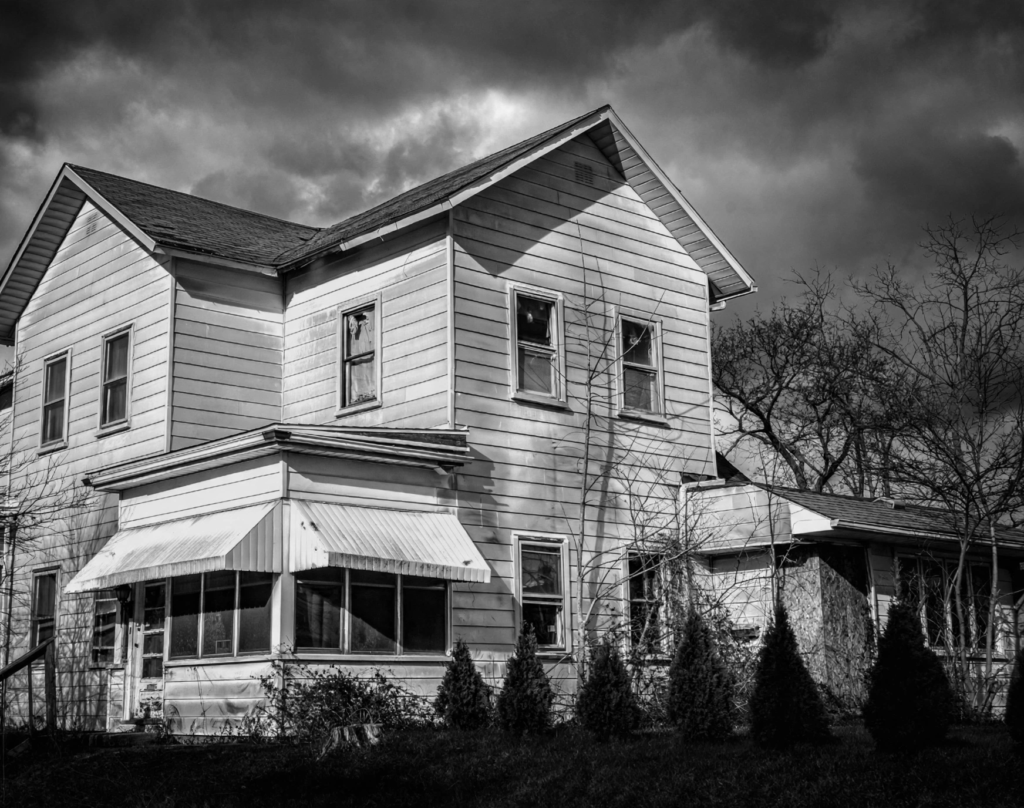
A Modest Frame House in a Small Indiana Boomtown That Multiple Paranormal Teams Have Reportedly Refused to Finish Investigating
Hartford City, Indiana, is not a place most people outside Blackford County could point to on a map. It is a small county seat of a few thousand people, the kind of town the natural gas boom of the late nineteenth century built and then quietly left behind once the wells ran dry.
Tucked into an ordinary residential block sits an equally ordinary-looking frame house, the sort of place that would draw no attention at all if not for a reputation that has, by the account of multiple investigation teams, sent grown adults with years of paranormal experience running for the door before their scheduled sessions were even finished. Locals call it the Monroe House, after the street it sits on, though the internet has largely settled on a blunter nickname: the Demon House.
Between conflicting stories about who built it, a police investigation triggered by human remains found in its basement, and a growing list of television crews and independent investigators who have walked away rattled, the Monroe House has become one of the most talked-about extreme haunted locations in the American paranormal-tourism circuit, a title it has earned largely without the benefit of a grand architectural pedigree or a single famous resident.
A House Built in a Region Transformed by Gas
The exact year the Monroe House was built is contested even among the people who study it closely, with accounts placing its earliest foundation anywhere from around 1850 to the 1860s to as late as the 1880s, depending on which local chronicler is telling the story. What is not contested is the world it was built into. Blackford County sat within the roughly eleven-county stretch of east central Indiana that the 1886 discovery of natural gas near Findlay, Ohio, and the subsequent Eaton gas well in neighboring Jay County transformed almost overnight, turning a slow-paced landscape of farms and modest county seats into a corridor of factories, speculative real estate, and rapidly growing towns between 1886 and 1901.
Before the boom, county seats across the region rarely held more than about 2,500 people and were typically built up with a modest mix of stores, churches, and a handful of Italianate-style homes belonging to well-to-do farmers or merchants, the same unassuming small-town fabric a frame house like the one on Monroe Avenue would have quietly belonged to.
In neighboring counties, the discovery of gas drew crowds of onlookers by the hundreds just to watch a well’s flame burn against the night sky, and land speculators drove up prices in anticipation of factories that, in many towns, actually arrived. The gas boom didn’t just bring factories; even after the gas itself ran out and diminished many of the smaller boom towns, it left behind, as regional historians have documented, distinctive brick commercial districts and attractive residential neighborhoods across the affected counties, the same general wave of small-town prosperity and new home construction that any ordinary frame house built in Hartford City around this period would have been part of.
There is no indication the house itself was ever anything more than an ordinary home built for an ordinary family; nothing about its architecture or its origins marks it as different from thousands of other frame houses raised across east central Indiana during the same boom years. Whatever the house eventually became in local memory, it did not start out as anything other than unremarkable.
The Berger Family and an Early Tragedy
According to local historical accounts of the property, the house’s first well-documented residents were the Bergers, a family of Belgian immigrants who arrived in Hartford City around 1892. The family’s patriarch, John Berger, reportedly died of tuberculosis within months of settling in, and not long afterward a fire tore through the home’s upstairs bedrooms, killing most of the remaining family and leaving only Berger’s widow and one child alive.
The widow Berger is said to have converted the damaged home into rental rooms to support herself, beginning a long pattern of short-term, high-turnover tenancy that locals now point to as the start of the house’s reputation. Multiple sources on the property’s history agree on a striking detail even if the finer points vary: for roughly the first century of its existence, no single occupant is recorded as having lived in the house for more than a year at a time.
Families moved in with ordinary hopes of settling down and, for reasons none of the surviving local records fully explain, moved back out again within months, a pattern steady enough that longtime residents of Hartford City could apparently set their calendars by it. It is exactly the kind of detail that is nearly impossible to verify against a formal historical record a century and more later, but it is also the detail that shows up most consistently across the handful of independent accounts of the house’s early decades, which is more agreement than most reputedly haunted properties can claim about anything.
The Meyers Incident and a Curse Takes Hold
One of the tenancies most often cited by local storytellers involves a man named Ulysses Meyers, described as a respected and stable member of the Hartford City community before he moved into the house. According to the accounts passed down locally, Meyers temperament changed not long after settling in, becoming erratic and prone to fits of rage that were out of character for him.
He eventually abandoned his family, drained their savings, and left town with another woman, a sequence of events his neighbors reportedly found so out of step with his known character that they began attributing it to something about the house itself rather than to the man. It was this kind of story, repeated and embellished across generations of Hartford City residents, that turned the Monroe House from a house with bad luck into a house locals began describing as cursed.
Rumors of Occult Activity and a Grim Discovery
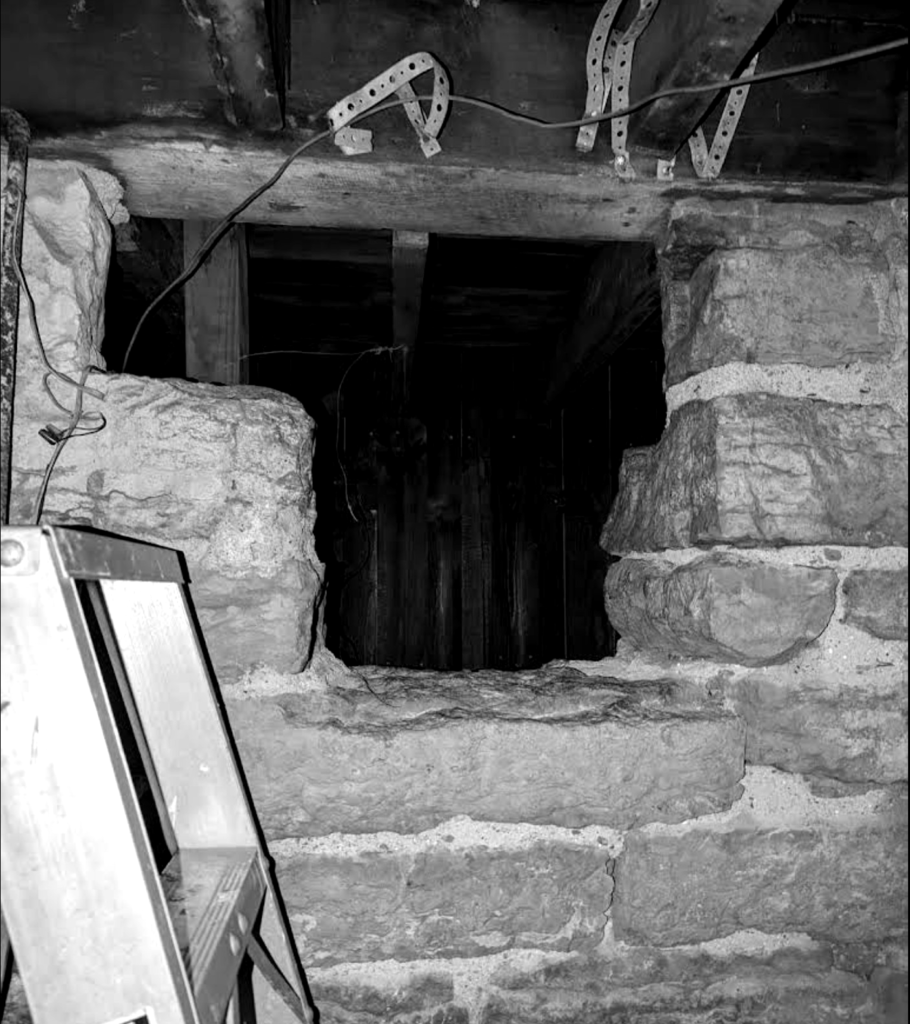
The house’s reputation sharpened considerably in the 1990s, when rumors began circulating that occult rituals were being carried out inside it, a development several local accounts connect to a marked increase in reports of disturbing activity on the property. That reputation, already well established in regional paranormal circles by the 2010s, was reinforced in a very literal and physical way in 2016.
During filming for an episode of the paranormal television series Paranormal Lockdown, hosted by investigator Nick Groff, the crew located what were later confirmed to be human skeletal remains hidden in a crawlspace beneath the basement. Local police opened an investigation, and a funeral home director consulted on the case estimated the bones to be at least a century old; the remains were sent for testing at an Indiana university, but their identity has never been publicly confirmed.
Some later speculation connected the remains to a missing teenage girl and to the same rumors of occult activity that had circulated in the 1990s, though none of that speculation has been substantiated by any official finding, and it is worth being clear that a genuine unsolved discovery and decades of secondhand rumor are not the same kind of evidence even when they get discussed in the same breath.
The discovery did more than validate decades of ominous local storytelling, however uncertain its ultimate explanation: it gave the Monroe House something most reputedly haunted houses never get, an actual unsolved mystery, documented by an actual police report, buried in its own foundation.
Why Paranormal Investigators Keep Coming Back
The Monroe House’s rise to national attention says as much about the broader culture of amateur ghost hunting as it does about the house itself. By the mid-2010s, sociologist Marc A. Eaton estimated that more than 3,000 organized paranormal investigation teams were operating across the United States alone, most of them made up of ordinary people rather than television professionals.
Based on years of fieldwork and dozens of interviews with investigators, Eaton concluded that “paranormal investigation functions as a spiritual practice for participants,” whether those participants belong to any organized religion, with investigators typically describing themselves as seeking contact with something they call the afterlife, the spirit realm, or simply the other side.
Folklorists studying the related explosion of ghost-hunting television have described a similar dynamic playing out on camera: shows built around visiting reputedly haunted locations function as a modern performance of much older ghost-story traditions, letting each new crew of investigators re-enact, and add to, a legend that keeps growing with every retelling. The Monroe House, with its buried remains, its fleeing investigators, and its widely shared reputation as one of the country’s most extreme locations, has become an especially potent stage for exactly that kind of ongoing, collectively authored legend.
Why Visitors Call It Haunted
Investigators who have spent time in the Monroe House describe a fairly consistent set of phenomena, concentrated heavily in the basement and, to a lesser extent, the upper floor. Reported activity includes shadow figures described as lacking clear human features, disembodied footsteps and knocking, unexplained screaming and eerie voices, sudden physical sensations investigators describe as being touched or grabbed, and what several teams have characterized as poltergeist-style activity, including unexplained vibrations and small fires with no apparent source.
What distinguishes the Monroe House from many other reputedly haunted sites, according to accounts from multiple independent teams, is how often experienced investigators cut sessions short. One team that investigated the basement in 2014 reportedly fled the house before their session concluded and has declined to discuss what happened there in any detail since, a silence that has only fed further speculation among other investigators about exactly what they encountered.
A more recent investigation in May 2022 by an independent paranormal team documented shadow sightings, unexplained sounds, and physical vibrations during an overnight session, reporting the upper floor as unusually active that night even though the basement remains the location’s most consistently cited hotspot. The house has since appeared on paranormal programs including Ghost Adventures and Paranormal Lockdown, was the subject of the 2019 documentary The Mysterious Monroe House, and inspired investigator Richard Estep’s 2021 book On Dark Ground, which recounts a team being deliberately locked inside the house overnight to investigate its claims firsthand rather than simply touring through it with an easy exit available.
Visiting the Monroe House Today
The Monroe House is not a museum or a walk-in attraction; access is limited entirely to scheduled overnight paranormal investigation events booked in advance through American Hauntings Ghost Hunts. Current events run roughly six hours, typically from 7 p.m. to 2 a.m., cost around $80 per person, and are open to guests age 13 and older, with anyone under 18 required to attend with a supervising adult.
Reservations are handled entirely online, must be paid in advance, and are explicitly non-refundable, and organizers routinely note that spots for each date sell out quickly given the property’s reputation and limited capacity. Anyone planning a visit should treat it the way its organizers do: as a serious, all-night investigation of a working paranormal-research site rather than a casual haunted-house walkthrough, with full access to the basement and all floors but only limited wheelchair accessibility given the age and layout of the building.
Given how frequently listed dates sell out and how firmly the no-refund policy is enforced, anyone genuinely interested in attending is better served checking the booking calendar well ahead of a preferred weekend than waiting until the week of an event and hoping a spot is still open.
Does the fact that no one can even agree on when the Monroe House was built make its long list of short-term tenants and fleeing investigators more unsettling, or does a house need a truly grand and well-documented history to earn a reputation this extreme? Let us know in the comments below.
Sources consulted for the historical details in this post include James A. Glass, “The Gas Boom in East Central Indiana,” Indiana Magazine of History, Vol. 96, No. 4 (December 2000), pp. 313–335; Mikel J. Koven, “Most Haunted and the Convergence of Traditional Belief and Popular Television,” Folklore, Vol. 118, No. 2 (August 2007), pp. 183–202; Marc A. Eaton, “‘Give us a Sign of Your Presence’: Paranormal Investigation as a Spiritual Practice,” Sociology of Religion, Vol. 76, No. 4 (Winter 2015), pp. 389–412; KC Ghosts’ and Haunt Bound’s listings on the Monroe House; Fear Alley’s account of the Berger family history; American Hauntings Ghost Hunts’ and Bump in the Night’s current visiting and booking information; and Richard Estep’s On Dark Ground: Investigating the Haunted Monroe House (2021).