The Case in Brief
A High Gothic Showpiece That Became, in the Family’s Own Words, the City of Heartbreak The Mark Twain House rises from the idyllic Hartford…
A High Gothic Showpiece That Became, in the Family’s Own Words, the City of Heartbreak
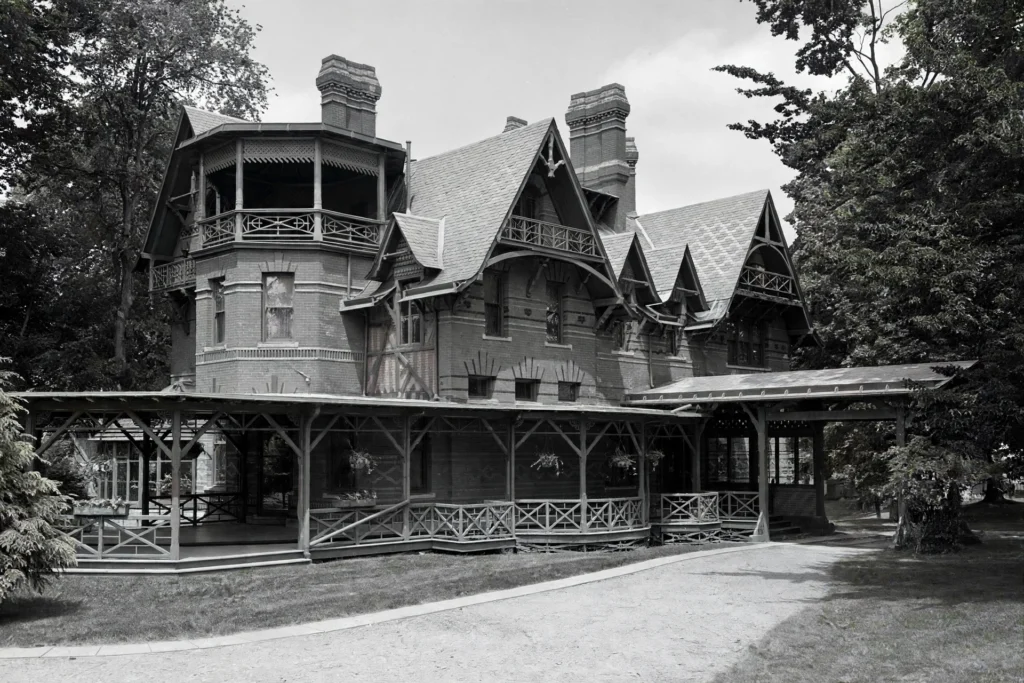
The Mark Twain House rises from the idyllic Hartford suburb like a dwelling fit for a different destiny that awaited its owner. Steeply pitched gables, intricately patterned bricks, and asymmetrically placed turrets all suggest a mansion fit for a rising literary star to settle down in with his growing family. And, for a brief seventeen years, it was. Then the money stopped flowing in, the family fled to Europe, convinced they were only gone for good, and a daughter’s spirit was said to have lingered on inside the mansion long after her parents’ return. The ghost stories told about the Mark Twain House required little embellishment, for tragedy had already stalked its corridors before anyone would think of blaming it for haunting.
A High Gothic Showpiece for a Rising Literary Star
Samuel Clemens (already famous under his pen name) commissioned architect Edward Tuckerman Potter to design the house in 1873; it was completed the next year at a cost of roughly $70,000 (a large sum, made possible largely by the inheritance his wife Olivia left him). Potter worked in the idiom of High Victorian Gothic, resulting in the house’s steeply pitched rooflines, dramatically asymmetrical bay windows, and an overall silhouette that biographer Justin Kaplan has likened (perhaps not coincidentally) to a “steamboat, a medieval castle, and a huge hanging cuckoo clock.”
An unlikely yet apt description for the home of a riverboat pilot turned novelist. Following the runaway success of Tom Sawyer in 1881, the Clemenses hired the design firm of Louis Comfort Tiffany (the Associated Artists) to do a total interior renovation, including the addition of the elaborately stenciled walls, furnishings, and decorative ceiling that lend their characteristic style to the house’s most photographed rooms today. Twain did his writing on the top floor of the house, a set of rooms including a private study and billiards room that afforded him a welcome respite from the chatter and bustle of the household below. It was here that Tom Sawyer, The Adventures of Huckleberry Finn, Life on the Mississippi, and A Connecticut Yankee in King Arthur’s Court were all substantially written.
Seventeen Years, and George Griffin’s House Too
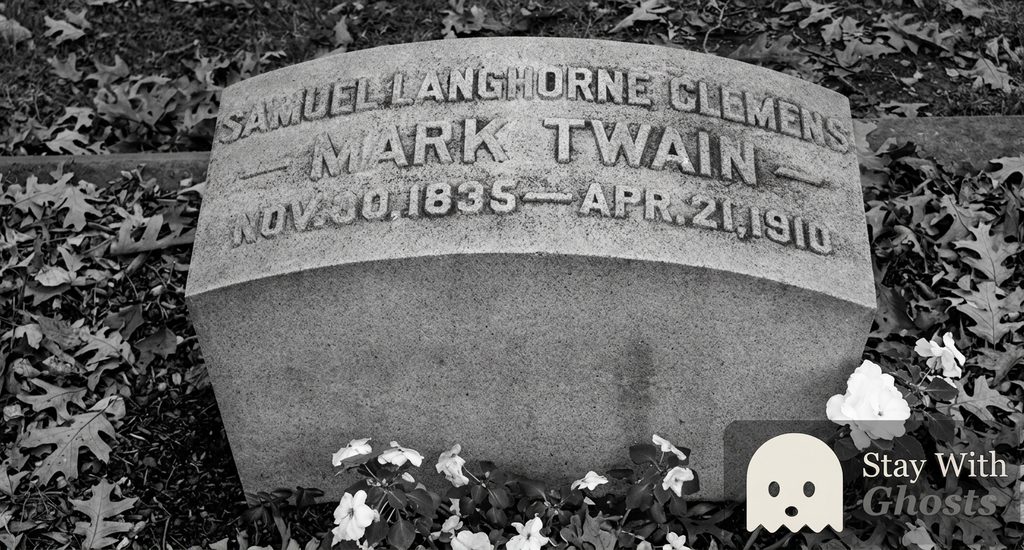
The Clemens Family occupied the house from 1874 to 1891, during which Twain’s most productive period was occurring. And as promised, the family that filled these rooms was larger than Samuel, Olivia, and their three daughters. George Griffin, employed as a member of the Clemens staff shortly after the house was completed, would become one of its most important residents. Enslaved as a boy in Maryland, Griffin was freed by the Emancipation Proclamation and served as a body servant to a Union general during the Civil War before coming to Hartford, where, as family lore has it, he came up from the South simply to wash windows and never went back.
He served as the Clemens’s butler for the next seventeen years or so, entrusted with the family’s valuables and, in every account that survives, regarded more as family than help, becoming an idol for the Clemens children and a beloved figure for every guest who came into the house. Long after his service in the Twain household, Griffin continued to be a pillar of the community, eventually becoming a deacon at Hartford’s African Methodist Episcopal church and a trusted political advisor to the Black residents of the city. He died shortly after the family left Hartford and was buried in an unmarked plot in Queens, New York, which the Mark Twain House has more recently corrected with a proper headstone.
Ruin, an Ocean Away
The family did, however, not intend to make Hartford their permanent home. Twain had invested a small fortune in James W. Paige’s typesetting machine, a magnificent invention that proved to be technologically ingenious but commercially unviable, and by the early 1890s his publishing company, Charles L. Webster and Company, was in decline, too. Then came the Panic of 1893 and the pressure mounted for Twain to move elsewhere.
He and his family tucked themselves away in Europe, where living expenses were considerably less than they were in Hartford, until conditions looked more hopeful for Twain. For Clara, the family’s last morning walk along the front of the house, each member of the family scanning the faces of their friends, servants, and pets for one last look before passing tear-blinded out the door towards unfamiliar lands, would long remain a poignant memory.
They never moved back in. In August 1896 (while Twain and Olivia were still away), their daughter Susy, who was only twenty-four, came back to Hartford, became ill with spinal meningitis, and died in the house that had been her home, her parents too late to get to her. Twain later wrote to a friend that Hartford “is not the city of Hartford; it is the city of Heartbreak.” The family sold the house in 1903 to insurance man Richard Bissell (and his wife Marie), who redecorated much of the interior in keeping with more modern tastes, and so ended the Clemens family’s direct connection with the house.
Boys’ School, Apartments, and a Brush With the Wrecking Ball
What followed was decades of decline. The Bissells eventually moved to the suburbs and rented the house to a boys’ school before selling it off completely to real estate speculators who were busy turning the once-upscale neighborhood from its leafy Victorian mansions into a string of everyday apartment buildings and shops.
The former Clemens home was a more upscale equivalent of the latter, its grounds left surprisingly untouched even if its architecture increasingly became, as the city grew up around it after the First World War, an unwelcome anachronism; one history memorably classified it under the rubric of the Cataleptic Style. By the late 1920s, the owners were reported to have been prepared to knock down the house entirely and replace it with an auto showroom.
It survived thanks only to Katharine Seymour Day, daughter of one of Olivia Clemens’s oldest Hartford friends and granddaughter of Harriet Beecher Stowe, whose own house stood nearby in the Nook Farm. Day formed a preservation group called the Friends of Hartford, fought what she bluntly called the local political establishment that stood in her way, and negotiated a$155,000 purchase of the grounds in 1929 (partly funded by a benefit concert given by the Twain’s surviving daughter, Clara Clemens Gabrilowitsch).
Yet preservation did not mean restoration. Not yet. For the next two decades, through the Depression and the Second World War, the upstairs rooms remained a carefully vetted apartment building, with tenants handpicked by Day, while the city leased space on the ground floor for a branch of the Hartford Public Library.
From Rescue to Restoration
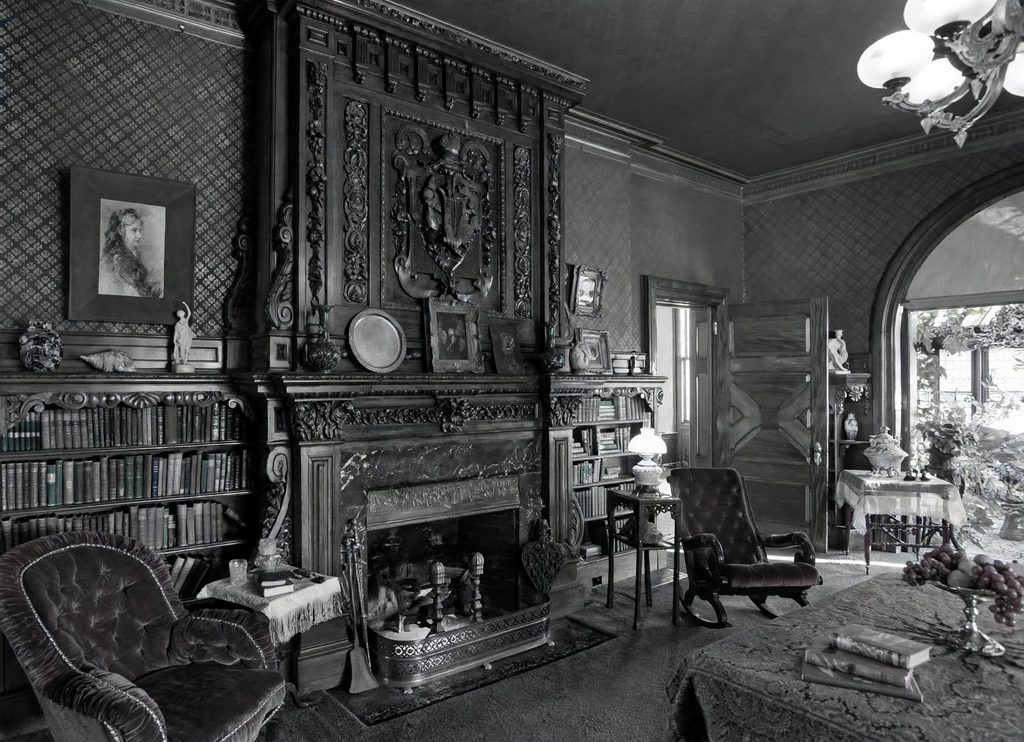
Real restoration began in the 1950s, when a new crop of enthusiasts and a vigorous local fundraising campaign (they set a goal of $30,000, a large sum in those days) helped to fund the restoration of the house’s structural systems, roof, electrical wiring, and heating system. Visitation surged as rooms opened to the paying public, rising from about 600 a year to nearly 1,400 within 5 years. Actor Hal Holbrook, recently come to national prominence for his portrayal of Twain on stage, lent his support, along with that of his wife, soon after his groundbreaking television portrayal of the author.
The Hartford Foundation for Public Giving also stepped in as a major donor. In 1959, a mortgage-burning party was held to mark the final payment on the note given to Day’s 1929 rescue thirty years earlier. Restoration was an ongoing effort until 1974, when the house officially reopened to the public as a museum. The museum’s grounds were again enlarged to include a $16.3 million LEED-certified visitor and education center built alongside the original house in 2003.
Twain’s Own Fascination With the Unexplained
Long before ghost tours were a thing, Twain was fascinated with ghosts and things. That’s why it doesn’t seem surprising that the house has acquired something of a haunted reputation in recent years. Twain belonged to the London-based Society for Psychical Research in 1885, one of America’s leading lights in this still-simmering, if semi-scientific, inquiry into telepathy and related subjects. He was a prolific writer on the subject of mental telegraphy, studying cases of what he termed thought transference between human minds at a distance.
The most startling case of premonition in Twain’s life occurred a decade before he bought the Hartford house; when he was a young riverboat pilot in 1858, he dreamed that his older brother Henry had been killed and was lying in a metal coffin dressed in Twain’s clothes, with a bouquet of white flowers on his chest save for a single red rose at the center. Henry was later mortally wounded in an explosion of a steamboat boiler, and Twain found him prepared for burial just as he’d seen him in the dream, down to the borrowed coffin and the unexpected red rose. Olivia became a Spiritualist after Susy died in 1896, and Twain, never one to be easily swayed, attended several séances with his wife but never got beyond believing he’d had contact with the dead.
Why Visitors Call It Haunted
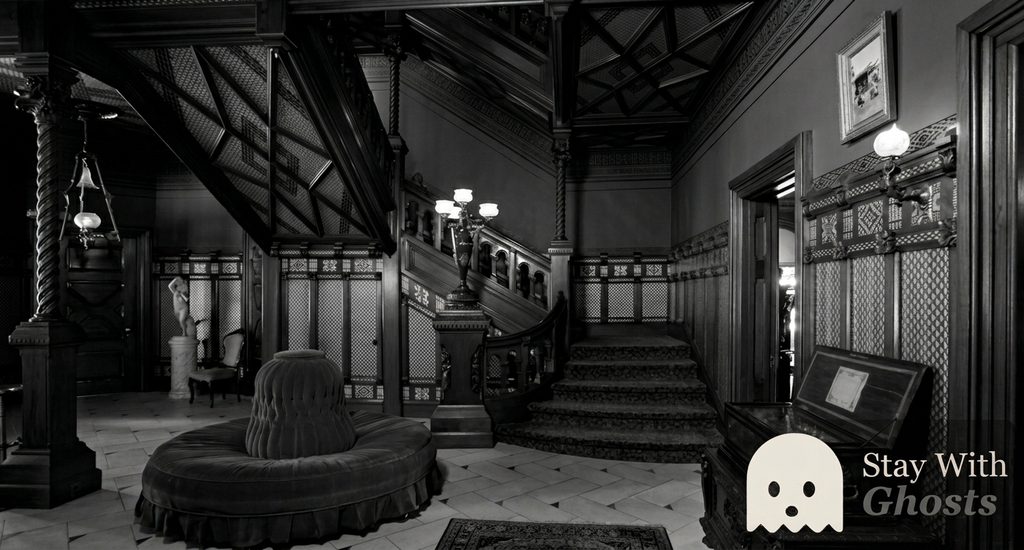
Modern accounts of the Mark Twain House focus on the family and staff who lived and died in it. Susy’s is the most common, a white Victorian dress seen floating in the upper rooms, sometimes with childlike laughter or a gentle tug on a visitor’s sleeve or jewelry, most often reported in or near her old bedroom and the library. George Griffin is also said to appear, a silent figure sometimes glimpsed standing behind tour guides on the third floor, keeping him, in local memory, as much a part of the house’s furnishings as the family he served.
Other stories tell of loud, unexplained bangs in the former master bedroom and nursery, and the billiard room where Twain wrote; visitors and staff have seen drifting cigar smoke with no visible source, heard footsteps, and conversations in vacant rooms. The most spectacular single tale comes from 1967, when a silver tray hurled itself across a basement room in full view of witnesses.
The Syfy series Ghost Hunters investigated the house in 2009, finding unexplainable sounds and odd thermal variations but losing a significant portion of their footage to a crashed recording drive, and debunking at least one tale, a fluttering curtain, as the result of a loose window panel and not an oubliette. It is worth noting, in the interest of fairness, that some of the people who have investigated the house’s ghost stories most thoroughly have also been the first to note that little to nothing was formally documented about hauntings in the house before TV crews came to look for them; however, individual visitors have described unexplainable incidents, like an oft-repeated tale of tugged clothing from a 1994 visit, that antedate any of the shows at all.
Visiting the Mark Twain House Today
The museum is open 7 days a week (generally 9:30 am until 5:30 pm, with the last tour departing at 4:15 pm), and closed on a handful of major holidays per year. You have two tour options: the standard General House Tour, a roughly 55-minute guided walk through the three-story mansion that runs about $28 for adults, or the longer Living History Tour, which includes costumed theatrical interpretation and tops out around 70 minutes; both include galleries in the Museum Center and a short Ken Burns–produced documentary on Twain’s life.
Since tours are limited to small groups, it’s worth reserving well in advance, especially if you’re visiting on a weekend. Each spring the museum hosts a separate Ghost Tours series on evenings, leading visitors through the house’s darker history, its Victorian mourning customs, and its paranormal–television appearances (there are usually multiple time slots available on a single night). Worth lingering in the area, too, is the Nook Farm neighborhood, where Harriet Beecher Stowe’s own home is a stroll away, letting you experience two of nineteenth-century America’s most consequential writers (and two very different kinds of ghost story) in a single afternoon.
Does knowing that Susy Clemens actually died inside this house, and that the family called Hartford afterward the city of Heartbreak, change how you read the ghost stories that followed, or does the sheer real grief the house has absorbed make the hauntings feel almost beside the point? Let us know in the comments below.
Sources consulted for the historical details in this post include Steve Courtney, “Layer by Layer: The Restoration of Mark Twain’s Hartford House,” Mark Twain Journal, Vol. 58, No. 2 (Fall 2020), pp. 11–35; the Wikipedia entry on the Mark Twain House; the Mark Twain House & Museum’s own biography of George Griffin; American Hauntings’ account of Twain’s documented interest in psychical research and mental telegraphy; Damned Connecticut’s coverage of the Ghost Hunters investigation and visitor accounts; and the Mark Twain House & Museum’s current hours, admission, and Ghost Tours event listings.