The Case in Brief
A History of Healing, Horror, and Hauntings Standing in the hills of Weston, West Virginia, the Trans Allegheny Lunatic Asylum is a difficult place…
A History of Healing, Horror, and Hauntings
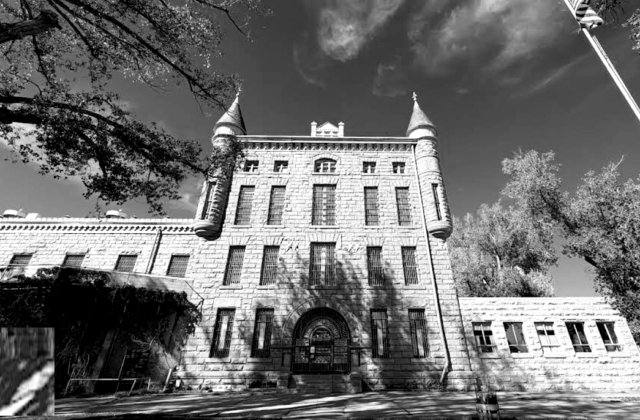
Standing in the hills of Weston, West Virginia, the Trans Allegheny Lunatic Asylum is a difficult place to miss or subsequently forget. The building’s hand-cut sandstone walls extend for a quarter of a mile, while its Gothic spires have kept watch over the Lewis County landscape since before the Civil War. Today, the abandoned hospital is a popular destination for “dark tourism,” attracting history buffs, architecture enthusiasts, and paranormal investigators alike.
But long before it became a must-see destination on any self-respecting Halloween scavenger hunt, it was a functioning psychiatric hospital, one that at times lived up to its progressive founding principles; to others, a grim combination of overcrowding and neglect. To get a sense of why so many who visit the asylum’s grounds swear they were not alone while inside the building, it is necessary to get a sense of what went on inside it.
A Hospital Built on a Radical Idea
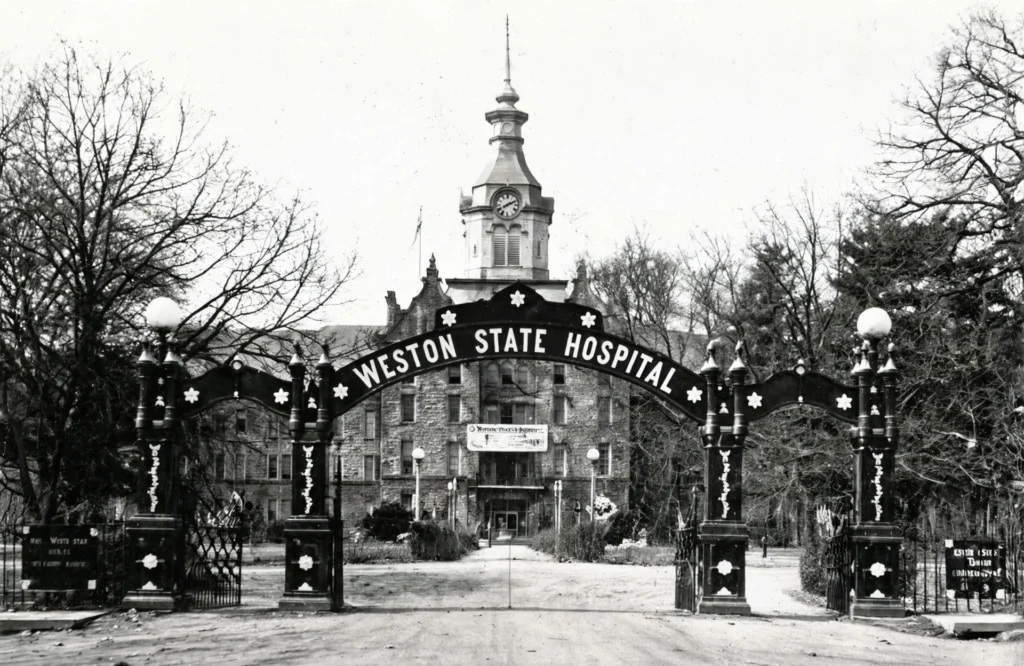
The story began in 1858 when the Virginia General Assembly permitted the construction of the Trans Allegheny Lunatic Asylum. The architect who designed the hospital was Richard Snowden Andrews. He developed the design based on the newly developed Kirkbride Plan, which was an innovative approach to treating mentally ill patients.
The Plan was created by Dr. Thomas Kirkbride, the director of the Pennsylvania Hospital for the Insane, who argued that patients could be cured using a specific set of architectural settings. The buildings were designed in a way to provide privacy to each patient, allow fresh air circulation, and give access to daylight and grounds for walking and working. These treatments were called “moral treatment,” which implied that madness could be removed. Overall, the approach was advanced for its time and reflected the progressive attitude towards the patients.
The construction process used local resources. It was mainly built from the blue sandstone extracted from Mount Clare. Moreover, most of the stonework was done by hand by German and Irish immigrants. Nevertheless, the Civil War broke out, and Virginia seceded from the Union, and all the unspent money had to be returned to the treasury. The construction of the asylum faced delays and only reopened when West Virginia became a separate state in 1863. Therefore, it was officially opened in 1864, but the construction of the other pavilions continued until 1881, and the cost exceeded the initial budget by $725,000, more than $300,000.
The Trans Allegheny Lunatic Asylum became the largest building complex made from hand-cut stone in the United States and the second largest in the world after the Kremlin. It operated for more than a century under different names, including West Virginia Hospital for the Insane and Weston State Hospital.
When Reform Gave Way to Overcrowding
Kirkbride’s model had a built-in limitation that the designer probably did not foresee. The original structure was supposed to hold only 250 patients or so, each one having sufficient living space and sunlight to allow for his “moral treatment.” This theory, too, failed to take reality into account.
The number of inmates began to grow rapidly from the mid-20th century and reached its peak of about 2400 patients – or even 2600, according to some sources – in the 1950s. Ten times more patients than planned for at the opening of the hospital, but the Weston State Hospital’s wards transformed from cozy single rooms to rough dormitory-style accommodations. Some patients even had to sleep in the hallways or in the bathtub. The numbers grew so large that they overwhelmed all sorts of resources: first, the heating and plumbing systems, then the personnel, and finally the food supplies. The hospital’s back wards were described as places of filth, where dysentery, pneumonia, and other diseases could be contracted.
It was also during this time that the Weston became involved with the West Virginia Lobotomy Project, which is how the place became associated with Dr. Walter Freeman, the infamous advocate of the ice-pick lobotomy. He performed the procedure for ten bucks, cutting the patient’s frontal lobe to make him docile and manageable. Thus, he took up the challenge of treating thousands of people with an inadequate medical staff: a necessity dictated by circumstances, as the authorities simply did not have the resources to deal with such a conflux of inmates. Hundreds of patients at the hospital received the ice-pick treatment, and many of them became permanently institutionalized and physically disabled as a result. Many lobotomized patients died as a result of this procedure. Other inmates were subjected to electroshocks, insulin shocks, hydrotherapy, and various other treatments known from mid-20th-century psychiatry.
When the deinstitutionalization wave and the psychiatric reform movement started, it became clear that the Weston State Hospital could no longer serve its purpose. It was closed in 1994, and its remaining patients had to move to the nearby William R. Sharpe Jr. Hospital.
The building stood abandoned for more than a decade before Joe Jordan bought it at a public auction in 2007 for 1.5 million. Instead of demolishing the structure, he invested significantly in restoring and revitalizing the site, reopening the hospital in 2008 as a historical and paranormal sightseeing destination. It was declared a National Historic Landmark in 1990 and was added to the National Register of Historic Places in 1978.
Why the Trans Allegheny Lunatic Asylum Is Considered One of America’s Most Haunted Places
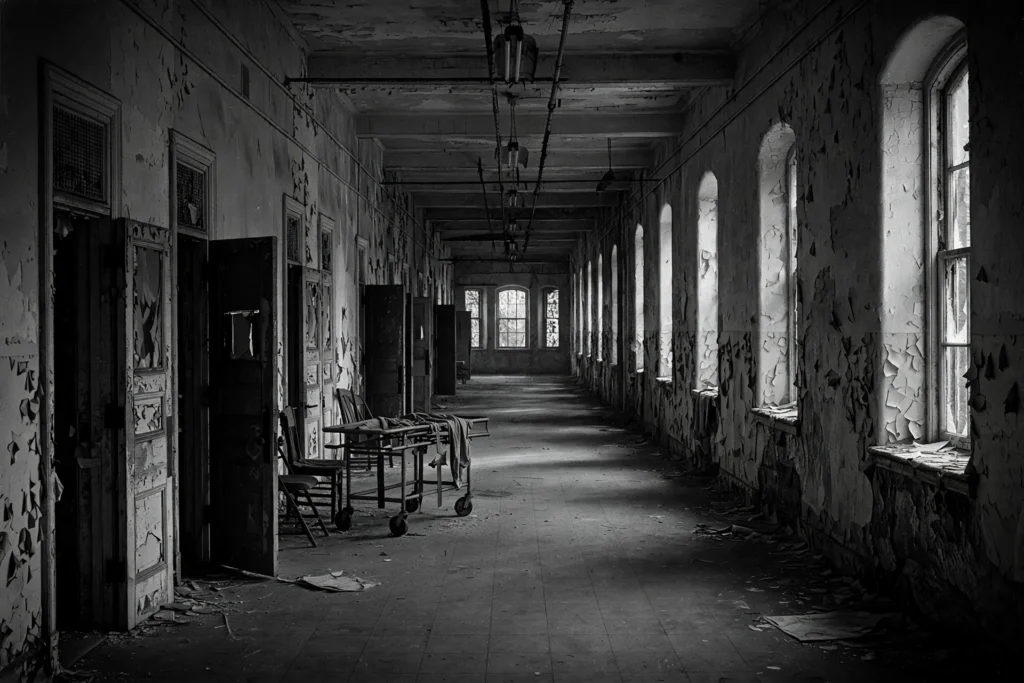
Considering the events that happened in its walls, overcrowding, experimental surgeries, and decades of pain and misery that are all crammed into this building, it’s not surprising that TALA has gained a reputation as one of the most haunted places in the U.S., even hosting paranormal investigation teams from SyFy’s Ghost Hunters, the Travel Channel’s Ghost Adventures, and Destination Fear. The Asylum even hosts its own after dark ghost hunts and historic tours due to the frequency of unexplained phenomena reported by both staff and visitors.
Here’s what people say they’ve experienced.
The Fourth Floor and the “Shadow Man”
The fourth floor is the building’s most renowned location for ghost hunters and ordinary visitors. People report hearing voices and seeing shadows in the empty halls. Doors slam shut for no apparent reason, and cold spots materialize suddenly, only to vanish just as quickly. It has been said that a mysterious tall figure in dark clothing called the Shadow Man haunts this floor; many paranormal teams have seen it walking the halls and captured it on camera.
Lily, the Child in the Ward
The most famous ghost story associated with the asylum is about a little girl familiar to everybody who visits the place called Lily. According to the legend told by the staff, Lily was born at the asylum to a patient and raised there by nurses who took care of her as their own child. She died of pneumonia when she was about nine years old. Now her spirit is said to wander the empty hospital looking for toys, and people report seeing balls rolling around and hearing flashlights turning on and off. It is also claimed that her music box plays tunes on its own, but the ghostly girl is reportedly harmless and only appears when someone calls her name or tries to communicate with her by giving her toys.
The Morgue and the Old Wards
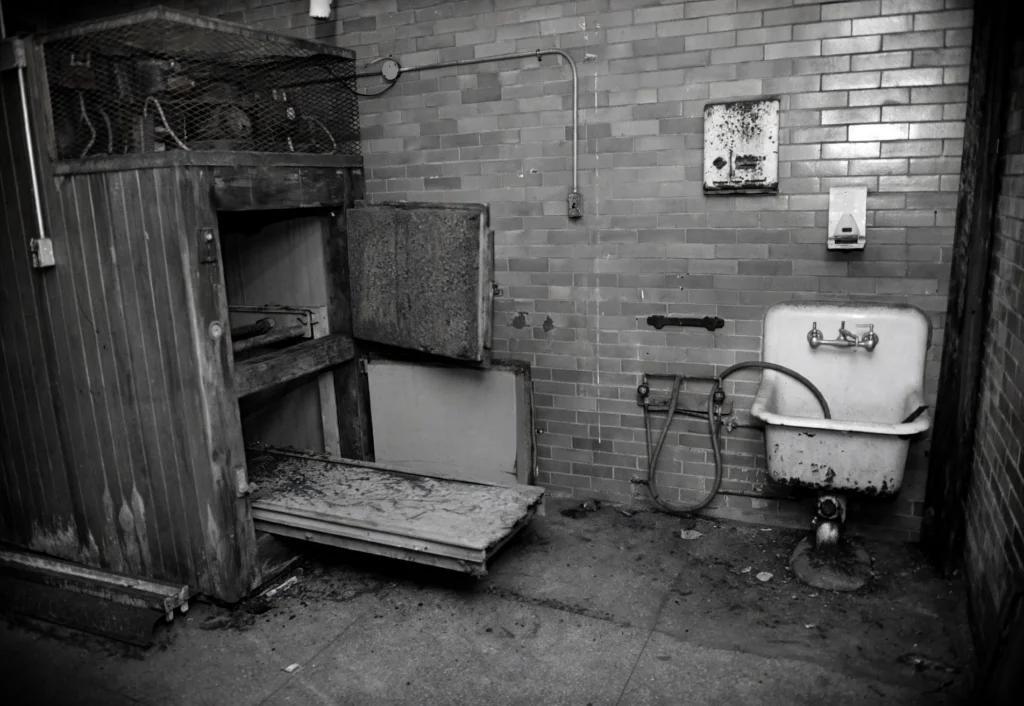
The building’s very first morgue, as well as a few of the older wards, are a popular choice for ghost tours for good reason. They are the locations where most paranormal investigators and witnesses claim to have felt the most oppressive atmosphere and heard strange voices on their recorders. Considering the number of patients who passed away inside these walls, many of whom were treated terribly by the staff, it’s not hard to understand why these particular rooms attract so many would-be paranormal researchers.
Soldiers From Another Era
Due to the hospital grounds being temporarily occupied by both Union and Confederate troops, there have been reports of people in old military attire walking up and down the hospital grounds. This occurrence predates the alleged psychiatric history of the asylum, adding credibility to its reputation as an eerie place.
Please bear with me, but none of this, unfortunately, is supported by any independent evidence or should be taken as factual information. Everything has been reported by staff, paranormal investigation groups, and even word of mouth from those who’ve had the pleasure of walking the hospital grounds long after sunset, but none have confirmed any paranormal activity to be real. But I do believe that the sheer amount of these stories and the building’s tragic history is what ultimately leads many to consider the abandoned Trans Allegheny Lunatic Asylum on Haunted Place’s most haunted list year after year.
Visiting Today
The Trans Allegheny Lunatic Asylum is a museum and entertainment venue located in Weston, West Virginia. Aside from its daytime guided historical tours, the place hosts evening ghost hunts and Halloween events. If you are interested in exploring the former Kirkbride hospital from the inside, want to revisit some of the most confounding medical practices of the past, or simply want to feel creeped out by supernatural activity, this is one of the few opportunities to do that in the United States.
Have you visited the asylum yourself, or caught something strange on camera during a tour? We’d love to hear about it in the comments below.
Sources consulted for the historical details in this post include the Trans Allegheny Lunatic Asylum’s official history page, the West Virginia Encyclopedia entry on Weston State Hospital, Wikipedia’s Trans Allegheny Lunatic Asylum entry, and the asylum’s own ghost tours page for reported paranormal accounts.