The Case in Brief
A Sandstone Fortress on the Wyoming Plains Where the Showers Still Run Cold, Long After the Water Was Shut Off The town of Rawlins,…
A Sandstone Fortress on the Wyoming Plains Where the Showers Still Run Cold, Long After the Water Was Shut Off
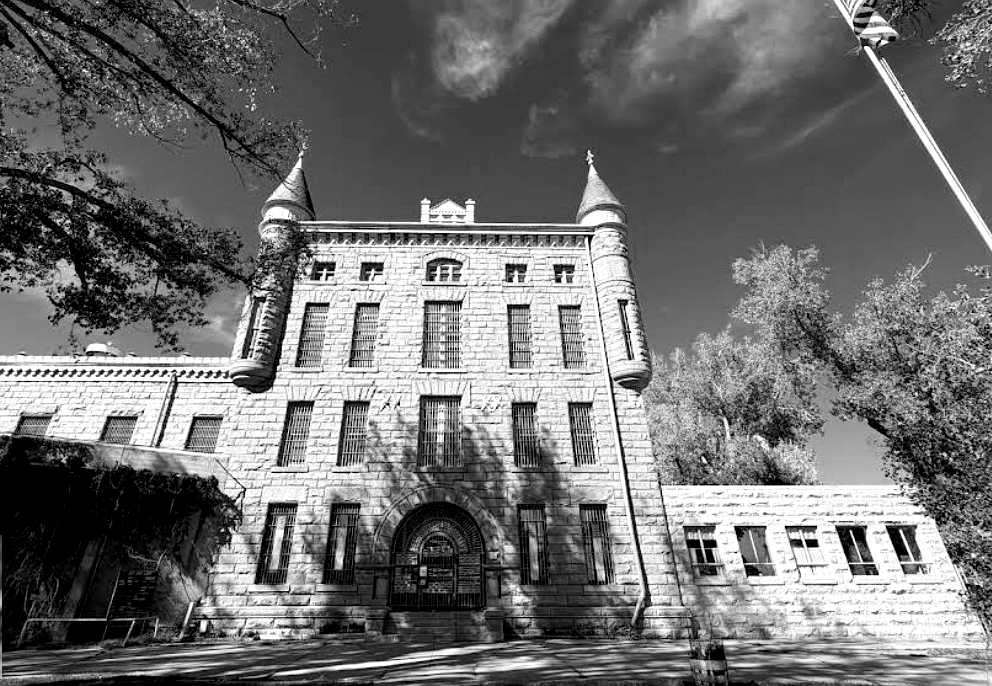
The town of Rawlins, Wyoming, is located on a high plains area subject to frequent and powerful winds that made the early settlers say that you could watch a storm for an hour before it would get close to you. So it was logical that the most impressive building in the region was a sandstone prison designed to withstand bad weather without heat. The Wyoming Frontier Prison, also known as the Wyoming State Penitentiary for most of its existence, was built in 1901, and it was nearly completed after more than ten years of interruptions. It was closed in 1981 after housing around 13,500 inmates and holding fourteen executions within its walls. Currently, it serves as a museum that attracts tourists because it is a hot spot of paranormal activity, with every person who enters its grounds witnessing an event that cannot be explained.
Thirteen Years From Cornerstone to Opening
The prison was built on a land purchase of about $75,000 approved in 1886, to give Wyoming its own penitentiary, rather than having the state’s prisoners housed in the smaller Federal Wyoming Territorial Prison in Laramie. The cornerstone was laid with suitable ceremony in 1888, but the subsequent hard times left territorial and then state legislators reluctant to spend more money on a new prison, partly out of concern about raising property taxes to pay for it. The building was left substantially unfinished for over a decade while Wyoming continued to send its prisoners to Laramie, and it was not until December 1901, thirteen years after the cornerstone went into the ground, that the first inmates finally arrived by train from the Territorial Prison to take up residence in a building most of them had probably heard about for most of their sentences already. It was a strange way to start the life of an institution: a prison whose construction took longer than many of the sentences served inside it.
Life Inside a Prison Without Water or Heat
The conditions awaiting those first arrivals were about as grim as the building’s long gestation suggested they might be. The original cell block held 104 cells, and none of them had electricity, running water, or adequate heating in a part of Wyoming where the winter temperatures have been known to drop to sixty below. Remarkably, hot water was not installed in that original block until 1978, meaning inmates had to endure roughly three-quarters of a century of frontier-style plumbing inside a building that was at that point still imprisoning people under thoroughly modern law. Women began arriving at the prison in 1902 and were held in a separate ward, though the state moved its last female inmate to a facility in Colorado by 1909, ending the practice of ever housing a woman inside the prison. The prison grew in fits and starts to meet demand it did not know it would have to handle: 32 additional cells were added in 1904, a second cell block with actual hot water and solitary confinement cells went up in 1950, and a 36-cell maximum-security addition followed in 1966, each expansion a quiet admission that the original sandstone building had been undersized from the moment it finally opened.
Discipline, Riot, and a Broom Factory Set on Fire
At first, the discipline in the prison was as harsh as the living conditions. For example, those who broke the rules were sent to the dungeon, which was designed for the most violent inmates and opened in 1906. Others faced corporal punishment on the punishment pole, which was also quite common in the past. Such a method of disciplinary training would be considered cruel and inhuman today, but at that time, it was regarded as normal. This was changed in 1912 when inmates staged a riot. They set fire to the prison’s broom factory and tried to escape while the guards were busy dealing with the flames. The attempt was relatively successful, as twenty-seven prisoners managed to escape. One of the residents of Rawlins was killed in the riots. After that, the prison became more difficult; concrete walls and guard towers were built around the prison by 1915. It is hard to say if it was the case, but several other attempts to escape occurred. In addition, the prison remained dangerous for its staff, as guard Ed Samuelson was shot and killed in 1907. There was even another escape in 1927. The work of inmates was also important for the prison’s history. For example, since its opening, a broom factory has been established within the prison walls. In addition, the shirt factory was also opened, and during the Second World War, the prison produced blankets for the army. This work was so good that the navy awarded the prison an E award for the production of wool goods.
The Inmates Who Made Rawlins Infamous
While thousands of ordinary train robbers, horse thieves and petty criminals passed through the prison’s cells during its eight-decade lifespan, a few inmates became genuinely well known across Wyoming. Bill Carlisle, convicted of a series of train robberies beginning in 1916, escaped from the prison at one point, promptly committed another robbery, and was recaptured and imprisoned before eventually winning parole in 1936, a career audacious enough that Carlisle became something of a minor folk figure in his own right. Annie Bruce arrived under far darker circumstances, convicted of killing her own father with a strychnine-laced pie in 1907 and remembered as the first woman convicted of murder in Wyoming history. Governor John Kendrick, for his part, reportedly pardoned inmate Henry Edmundson not out of any particular mercy but because Edmundson’s conduct inside the prison was so consistently troublesome that the governor simply wanted him out of the state altogether. None of these stories, however, carries quite the grim notoriety attached to Andrew Pixley, convicted of killing a circuit court judge’s children and eventually executed in the prison’s gas chamber, an execution now remembered less for the crime itself than for how long it reportedly took.
The Death House and the Switch to Gas
Executions at the prison were conducted within a specialized Death House featuring six death row cells, erected sometime between 1912 and 1916 depending on the source consulted, along with an indoor Julien Gallows utilizing a water operated mechanism for its trapdoor. The same model of gallows, it is worth noting, was the one used to hang the famed Wyoming stock detective and hired gun Tom Horn in Cheyenne in 1903, an unrelated case to the Rawlins prison, but one that shares a method of execution. Nine men were hanged on the prison’s own gallows before Wyoming switched their method to gas in 1936, with five more men dying in a chamber that used hydrocyanic acid gas and remains as one of the museum’s grimmer exhibits. Andrew Pixley’s execution in that chamber has become a part of prison legend, with accounts passed between guides and investigators claiming he reportedly took nearly seven minutes to die, laughing most of the way, impossible to corroborate with any official source, but has since influenced discussion around his former cell. Fourteen men in total were executed at the prison using either of the two methods, out of the approximately 200 to 250 deaths recorded in total at the prison from natural causes, suicide, and inmate-on-inmate violence.
A Different Kind of Outlaw Legend, Just Down the Road
Rawlins has another piece of outlaw lore that is worth untangling from the prison’s own history since visitors often confuse the two stories. Decades before the penitentiary opened its doors, stagecoach robber George Parrott, known locally as Big Nose George, was lynched by a Rawlins mob in 1881. What happened to his body afterward would become one of the most grimly famous episodes in the history of Wyoming’s frontier. According to local legends, two local doctors reportedly skinned parts of his corpse and made at least one item of footwear tanned. This story takes place in the Rawlins’ Carbon County courthouse and jail of the territorial era, not the Wyoming Frontier Prison. The latter did not exist yet when Parrott left the scene, but the two tales have been intermingled enough in local color to be worth telling separately.
Closure and Rebirth as a Museum
By 1980, the aging penitentiary could no longer serve its purpose as a model correctional facility. The state moved its remaining inmates to a newly built North Facility on the edge of town. The old sandstone prison finally closed its doors for good in 1981, after eight decades of uninterrupted incarceration. The abandoned building found new life in 1987, when a low-budget movie called Prison , starring an unknown Viggo Mortensen, was filmed in its crumbling cell blocks. A joint powers board took over the running of the complex the following year. It was converted into a museum and re-baptized the Wyoming Frontier Prison in 1988. The building was added to the National Register of Historic Places, and today attracts roughly 15,000 visitors a year, who come to see the cellblocks, cafeteria, and Death House.
Why Visitors Call It Haunted
Paranormal investigators who’ve been inside the Wyoming Frontier Prison characterize it as especially busy territory, even in the haunted prison world, with staff saying that even organized investigations on the grounds have yielded some type of paranormal evidence. The prison’s former shower room is considered among the most active, with visitors and investigators reporting hearing someone crying as they approach the area; though the facility has been emptied in this area, some have said they’ve found wet footprints on the floor of a shower that’s been non-functional for several years. The gas chamber and the cell occupied by Andrew Pixley are also a draw, with reports of disembodied footsteps and candles investigators have placed in the cell as part of their sessions said to flicker, then go out, only to be relit. In the old Death House, visitors have described a feeling of pressure in the chest and a vision of a man wearing a brimmed hat near where the gallows had been. Guests around the building describe being touched on their shoulders or their backs, having their hair tugged, and hearing their names called by no one in particular, as well as cell doors opening and closing and small objects disappearing and appearing elsewhere. One local legend is sometimes called the story of the Pie Lady, involving a woman who made pies for the inmates in the prison’s early years who was murdered by a recently paroled inmate she had befriended; other prisoners said to have hanged the man themselves from the second-floor balcony in retribution, with visitors now sometimes claiming to spot that same sight reenacted on the upper walkway. Documentary crews from Ghost Adventures have been to the site and described the phenomenon, including a camera the crew says moved without anyone touching it, and site director Tina Hill described the sheer volume of reports by saying it’s “difficult to pull any one spirit out of the pack.”
Visiting the Wyoming Frontier Prison Today
The Wyoming Frontier Prison Museum, located at 500 W. Walnut Street, Rawlins, takes pride in providing guests with roughly three-hour-long guided historic tours of the cafeteria, prison grounds, three former cell blocks, and the Death House, but it closes seasonally and at times on short notice due to dangerous winter roads, so calling ahead on any given day that it is scheduled to be open is always recommended. In addition to its daytime historic tours, the museum offers outside companies to run night ghost hunt events at the prison, usually open from 8 p. m. till 2 a. m., with arrivals starting as early as 7:30 p. m., costing around $129 per person with the option to pay in installments, for guests of age 18 and older only, requiring a photo ID and a printed or electronic confirmation of booking upon entry, and asking every group to leave something valuable with them as a deposit, such as a phone or car keys, while forbidding any photography, videography, or audio recording by the guests during the event, but allowing them to bring along their own paranormal investigation gear, usually featuring group vigils, experiments with the Estes Method, free roam, and an optional solo vigil inside the old gas chamber for the brave ones who wish to experience it. The museum also hosts dedicated Haunted Halloween tours every year around the day of October 31, as a separate event from its regular historical tours.
Does knowing that the prison itself stood half-built for thirteen years prior to its first inmate change the nature of the concept of restless energy trapped within it, or does a building that operated for eighty years without heat or hot water require no ghosts to make it one of the bleakest places in Wyoming? Let us know your thoughts in the comments below.
Sources consulted for the historical details in this post include the Wyoming State Historical Society’s WyoHistory.org encyclopedia entry on Wyoming’s first state prison; Cowboy State Daily’s history of the Wyoming Frontier Prison; Travel Wyoming’s feature on Wyoming’s infamous haunted prisons; Atlas Obscura’s entry on the Wyoming Frontier Prison Museum; the Wikipedia entry on Big Nose George; and Haunted Rooms’ event listing and visitor information for the Wyoming Frontier Prison ghost hunt.