The Case in Brief
The Kansas Farmhouse Poltergeist Case That Became a National Legend On a sleepy street in Atchison, Kansas, sits the home of a nineteenth-century story…
The Kansas Farmhouse Poltergeist Case That Became a National Legend
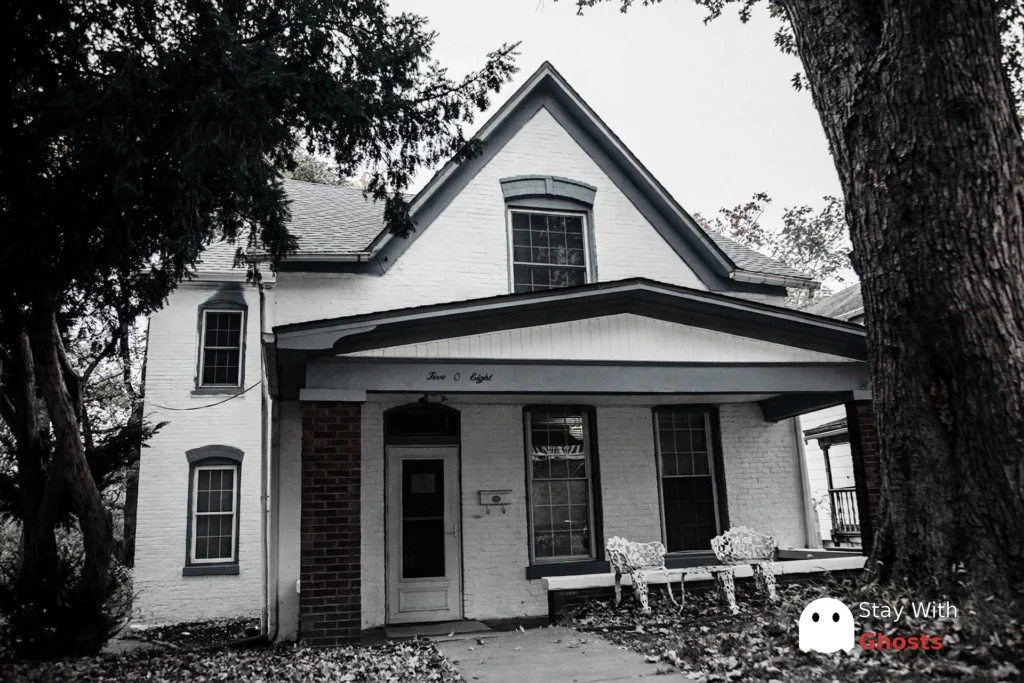
On a sleepy street in Atchison, Kansas, sits the home of a nineteenth-century story that is legendary even in the world of poltergeists. This seemingly ordinary residence has seen much activity that has made it a house noted by many paranormal investigators. The most common tale told about the Sallie House is one of a little girl who died on a doctor’s table and has been exacting revenge on any man who enters the home since her passing. What most know of the Sallie House is that it is a noted poltergeist case. Fewer know that the home was relatively still for a long period of time in its existence before becoming a site of paranormal discussion. Most people do not know that the family haunted the house for two decades before it was abandoned for good.
A Doctor’s House on North Second Street
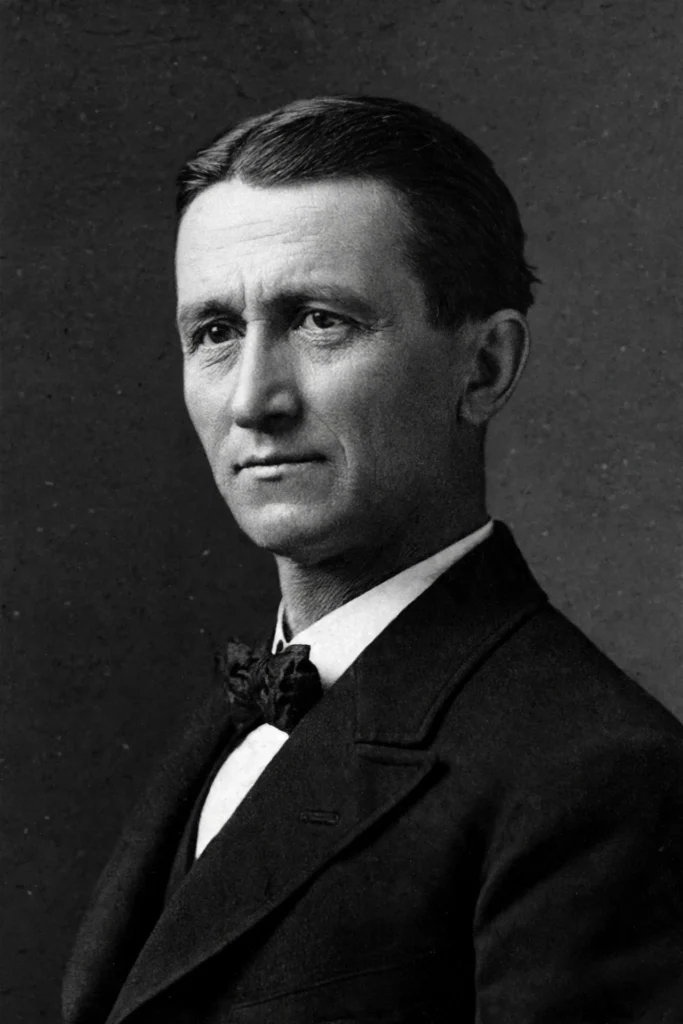
The house on 508 North 2nd Street was built in the mid-1800’s by Dr. Charles Finney, who lived in the house with his family on the upper floor while his offices were on the ground level, where his examinations and surgeries were presumably also held. That this was an entirely ordinary setup for a small Midwestern city in the nineteenth century is what makes this the linchpin of the legend; every single telling of the tale of Sallie’s death finds the child perishing in her ground-floor surgery rather than any other part of the house. It may have seen routine use and been a part of normal everyday life for the local people, but it has since become much more frightening due to the stories that have attached themselves to it.
According to local lore collected and published by researchers of Kansas ghost stories, the origin story splits into two competing versions almost immediately. The more widely repeated tells of a six-year-old girl, Sallie, who was brought to Dr. Finney suffering from severe abdominal pain, diagnosed with acute appendicitis, and rushed into surgery before the ether meant to sedate her had fully taken effect; she reportedly regained consciousness mid-incision, and the operation failed when her appendix ruptured, killing her on the table. One less commonly told version puts her death around 1905 or 1906, from a respiratory illness that the doctor allegedly failed to treat seriously until it developed into fatal pneumonia, after which he is said to have moved out of the house entirely. Neither version has ever been backed by a confirmed death record, birth certificate, or grave bearing the name, and some skeptics have gone further still, arguing that no verifiable record of a child named Sallie living or dying on the property exists, and suggesting the story may have been actively promoted at some point as a way of drawing visitors and attention to an otherwise unremarkable address. Whether that skepticism is fair or overstated, it points to something genuinely unusual about the case: unlike many haunted-house legends that grew slowly out of decades of scattered local rumor, the Sallie House’s fame rests almost entirely on one specific family’s account from one specific stretch of the early 1990s, with comparatively little independent lore predating it.
Atchison itself provides the texture that makes a story like this plausible in the first place. The city is located on the western bank of the Missouri River and was once a thriving railroad hub, the kind of nineteenth-century boomtown that built substantial homes like the Finney house on the strength of steady commerce, then watched much of that prosperity move elsewhere in the twentieth century, leaving a dense concentration of aging, but well-preserved, Victorian-era architecture. A 2026 academic study of Civil War memory in the region, examining the city’s history in the lens of an entirely different and far darker episode, a 19th-century lynching, opens by noting simply that Atchison today is best known as the most haunted city in Kansas, a label the city’s own historical society leans into every autumn with a guided haunted trolley tour past its most storied addresses.
The Pickman Family’s Year of Escalating Terror
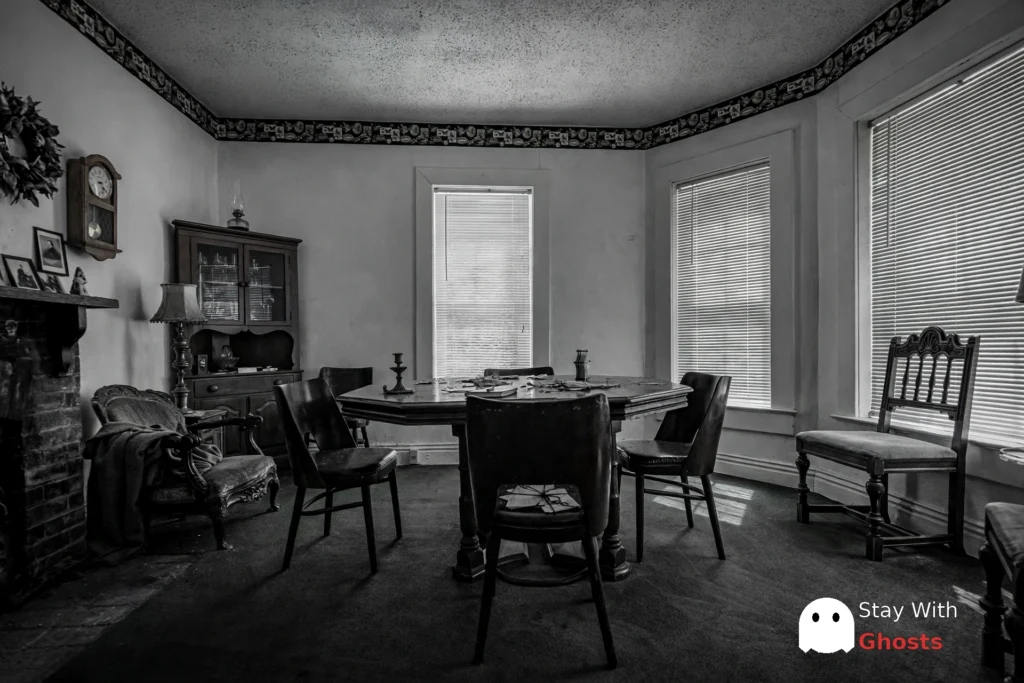
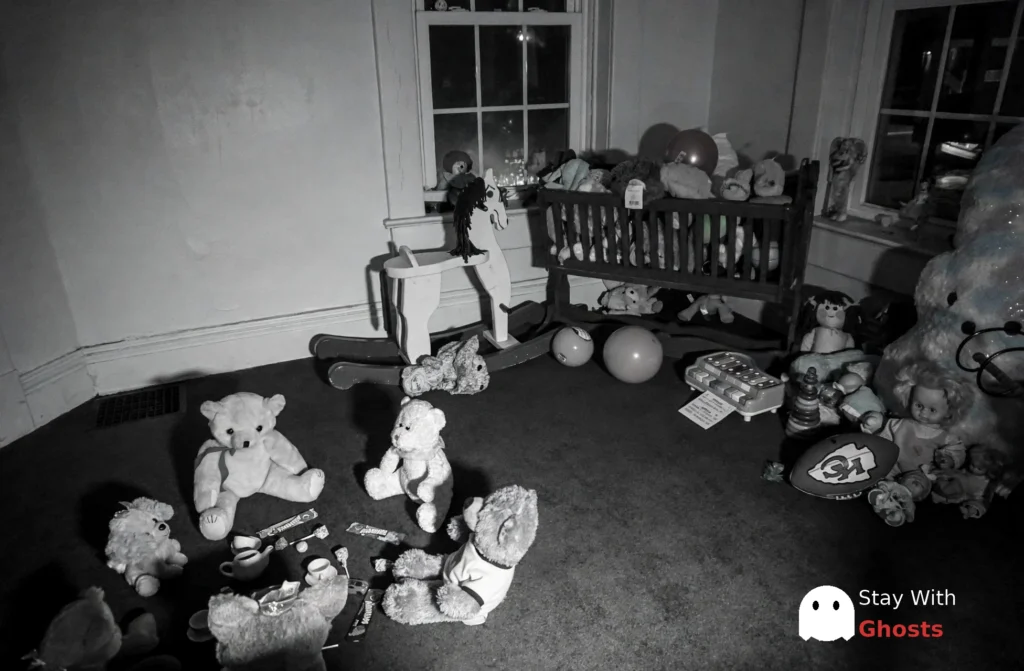
Whatever its origins, it’s been said that for many years the house stood pretty much unremarkable until 1993 when a young couple rented it and shortly thereafter began noticing strange things happening. The dog would refuse to go into the room that had been the surgery and bark and growl at something or someone; the TV would suddenly turn off on its own; a lone lamp would inexplicably go dark; framed pictures were often found upside down; and one time they came home to find all the stuffed animals in their daughter’s room forming a ring on the floor.
What started as spooky little pranks soon grew more sinister within a few short months. The family began to report having small fires within the house for no reason they could detect, and a series of physical assaults began, which appeared to target little else but the young husband. He described sudden sensations of the cold racing up his arms just before angry scratches appeared on his skin, starting lightly and growing darker and deeper until he was bleeding on his back, chest, and stomach; his wife and their infant daughter were apparently never touched. Several researchers who looked into the case have theorized that the entity was taking out its anger on men by targeting the young husband as punishment for the male doctor who let her die, an explanation that seems to fit quite well with the theory of her having died through surgery. The husband also described being confronted by what appeared to be an invisible hand hovering over the bed, aiming for his face, and a small girl standing in the kitchen on one other occasion. The couple took photos of the house multiple times while their experiences were occurring, and some of these photos showed streaks, shapes, and shadows the family and researchers tried to explain as something other than camera malfunctions.
Sightings, Psychics, and a House Too Frightening to Keep
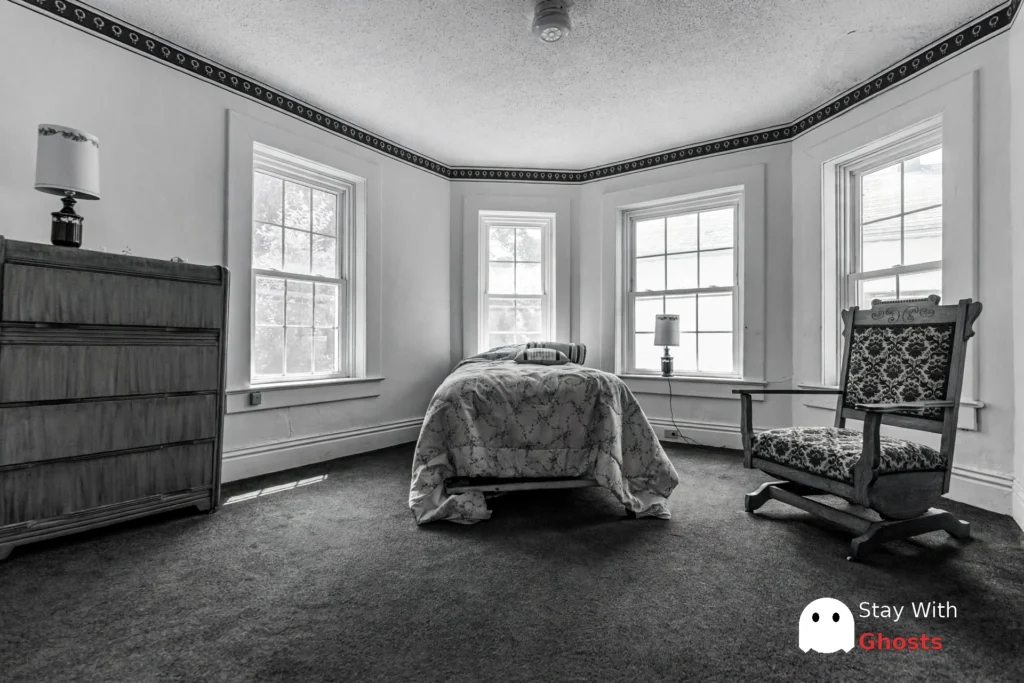
The family’s experiences attracted the attention of the paranormal television show Sightings, which came to the house several times during the next few years to investigate. One psychic researching the case happened to state that she was able to sense a child named Sallie in the house before being told the story, and stated seeing the girl’s face in an upstairs window just before arriving there. Another psychic, according to the investigators taking part, later claimed that Sallie wasn’t responsible for the most severe attacks, only the prank calls and the gentle moving of objects around the house and dimming of the lights, while an additional, more violent ghost, a female in her late twenties or early thirties, was attacking the husband specifically – but the investigators never reached agreement on this assessment, and the conflict between these explanations persists to this day, being one reason why this case remains notable decades later.
The crews managed to capture footage of the husband being scratched at randomly and spontaneously on camera, leading to the family becoming famous within paranormal investigation circles as being one of the most heavily documented poltergeist cases in history; a Showtime TV movie based on the events titled “Haunted Heartland” later aired. The family ultimately moved out for good after about a year of assaults, unwilling to continue living in the house with the husband as the sole target of the anger that the poltergeist seemed to possess.
The house was sold at some point, and the new residents and owners never experienced anything close to the same degree of supernatural harassment as the Pickmans did, leading some researchers to conclude that the poltergeist activity simply fades away with time, while others believe that the family was just especially susceptible to a supernatural influence that wasn’t present for everyone, making the Sallie House an ongoing topic of discussion for decades afterwards.
It became a prominent fixture in the national media landscape, appearing on “A Haunting”, “Paranormal Witness”, “Ghost Adventures”, and the YouTube channel “BuzzFeed Unsolved”, all investigating the same case, in which a woman, child or otherwise, seems to haunt the house, only ever being angry at men.
Why Atchison Calls Itself the Most Haunted Town in Kansas
The Sallie House isn’t the only haunted property in this Kansas City suburb. Atchison has cultivated its reputation as the most haunted town in Kansas for decades, and the local historical society offers a haunted-trolley tour each fall that winds through several of the area’s most famous haunted houses. Just up the street, the Glick mansion, home to a former Kansas governor, is said to be haunted by a less rowdy ghost who opens and closes doors but doesn’t scratch guests, while the Muchnic House is associated with a maid who fell down a back staircase and still occasionally wafts the scent of bacon frying on Sunday mornings, even though there isn’t a kitchen. Across town, a Gothic Revival-style house called the Gargoyle House has its own share of hauntings, but those tend to be more along the lines of local color than genuine scares — the story goes that the original owner made a deal with the devil to pay for the property, but the monks at the Benedictine college that shares the town with the Gargoyle House are said to keep a watchful eye on their 150-year-old grounds. But in this small Kansas community, the Sallie House’s reputation for physically menacing visitors has helped make it the haunted attraction of choice, rather than just one of several stops on a larger haunted-trolley tour.
Visiting the Sallie House Today
After years of disuse, it was on the market for real estate in 2016 and 2017, and now functions as an official paranormal tourism site, available directly through Visit Atchison, the city’s tourism office.
As of 2026, self-guided daytime tours are about an hour long, offered in time slices between 10 a.m. and 2 p.m., cost twenty dollars each per person, with a maximum party size of ten; all guests must be at least eighteen and sign a liability waiver in advance. For those who want to see everything, that means an overnight stay in the house: starting from three in the afternoon to nine the next morning, for $125 per person from November through August, rising to $150 per person in the self-described ‘haunted season’ of September and October, with a minimum party size of two and a maximum of ten. Reservations are made with full payment at the time of booking, with cancellations two weeks in advance returning the whole amount paid minus the cost of one night; anything closer to the date is non-reimbursable.
Guests staying overnight must bring their own sleeping bags, blankets, and pillows, as the house does not provide beds, and the rules prohibit smoking, pets, open flames, cooking, Ouija boards, or house-cleansing rituals of any kind, with violations being subject to a minimum fine of $150 per person; as of 2026, the basement is currently closed to visitors altogether. Photography and video recording are encouraged for those seeking to capture their own version of the anomalies reported by the Pickman family, and the house at least provides working restrooms, running water, and electricity, albeit as modest comforts that plenty of other overnight haunted-house experiences in the nation do not. Both types of tour require reservations to be made directly through Visit Atchison’s website rather than its previous owners, which might mean the schedule and rules change from season to season, so best you check for current availability before making other travel arrangements around it.
Would you spend the night in hopes of meeting Sallie, or is a one-hour daytime tour closer to your limit? Let us know in the comments below.
Sources consulted for the historical details in this post include Lisa Hefner Heitz, “The Most Haunted Town in Kansas: Atchison,” in Haunted Kansas: Ghost Stories and Other Eerie Tales (University Press of Kansas, 1997), pp. 157–176; Joshua Wolf, “Ghosts of Atchison: The Lynching of George Johnson,” in They Are Dead and Yet They Live: Civil War Memories in a Polarized America (University of Nebraska Press, 2026), pp. 111–128; the Wikipedia entry on the Sallie House; and current tour and booking information published by Visit Atchison.