The Case in Brief
The True History Behind Pennsylvania’s Most Haunted Institution On a hillside in Spring City, Pennsylvania, a handful of brick and stone buildings stand in…

The True History Behind Pennsylvania’s Most Haunted Institution
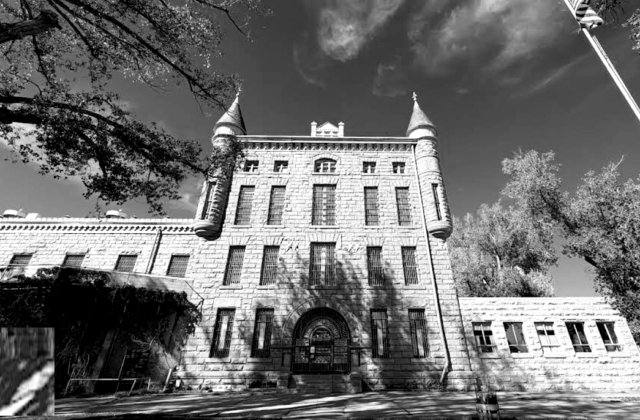
On a hillside in Spring City, Pennsylvania, a handful of brick and stone buildings stand in various states of decay, connected by overgrown paths and an underground tunnel system. This was once Pennhurst State School and Hospital, an institution supposed to take care of people with intellectual and developmental disabilities that became a national symbol of the failures of state-run care systems by the 1960s. Now it serves as a museum and is one of the most popular destinations on the most haunted places in the U.S. list.
While the alleged paranormal activity surrounding Pennhurst is the most talked-about part of the location on the web, the real story with the hospital is significantly more horrifying than any ghost-hunting TV show could tell. This is the history that helped shape the modern disability rights movement in the United States. Here’s what really happened at Pennhurst, and the things that still allegedly occur there.

Built for “Care,” Shaped by Eugenics
In 1903, the Pennsylvania legislature approved construction of the Eastern State Institution for the Feeble Minded and Epileptic on nearly 634 acres of Crab Hill in Spring City, Chester County. Construction on the facility lasted five years, and on November 23, 1908, the hospital admitted its first patient.
The asylum, which would grow to be known as Pennhurst State School and Hospital, opened at a time when many American institutions for the disabled were influenced by the eugenics movement, which held that society would improve by keeping “unfit” people such as the intellectually disabled segregated from the general population, including through preventing them from having children. By 1913, Pennhurst was promoting this philosophy; the Pennsylvania Commission for the Care of the Feeble Minded advocated forced institutionalization of disabled patients over treatment or education. This attitude led to the creation of the campus itself, as separate men’s and women’s cottages were built in 1916 to ensure the separation of the sexes and prevent reproduction.
Chronic Overcrowding and Institutional Neglect
Almost from the start, Pennhurst was unable to maintain an adequate standard of living for its residents. The facility became overcrowded within four years after its opening, and the number of inmates kept growing due to the influx of people with intellectual disabilities, orphans, immigrants, and those unwanted by the court and other institutions. In 1955, the population reached a peak of over 3,500 residents, whereas the number of beds was 500, with staff and funds many times lower than required.
As a result, many abuses and neglect occurred, such as the prolonged deprivation of clothes or bodily restraints, a lack of treatment and individual attention due to understaffing and underfunding, and inter-resident violence without any intervention or consequences. Moreover, many residents were not receiving any form of education or rehabilitation, despite being children or requiring therapy. Overall, the facility was not intended to be a hospital or a learning institution but rather a receptacle for those undesirable to society.

The 1968 Exposé That Changed Everything
Conditions at Pennhurst remained largely hidden from the public eye until 1968, when Philadelphia television reporter Bill Baldini was able to gain entry into the facility and document the conditions for his five-part series Suffer the Little Children, which aired on NBC10 from July 1 to July 5, 1968. With his cameras, Baldini was able to depict scenes that were previously unseen by the outside world, including crowded wards where inhabitants were forced to be naked or in restraints as a means of control, among other things. The series both terrified the Commonwealth and gained national attention for the cause of Pennhurst residents.
While this medium did not directly lead to the closing of the facility, it did pave the way for litigation that would eventually shut it down. In 1974, a class-action lawsuit was filed on behalf of Terri Lee Halderman, a Pennhurst inhabitant who had suffered some unexplained injuries over the course of her approximately ten-year stay at the facility. The case, Halderman v. Pennhurst State School and Hospital, was taken to trial in 1977, and a decision was made by U.S. District Judge Raymond J. Broderick that conditions in the facility were a violation of the residents’ constitutional rights. The ruling determined that the state of Pennsylvania would be required to transition to a community care model instead of institutional care. The case was taken before the Supreme Court twice more over the following years, and in 1985, Judge Broderick approved a consent decree mandating the closure of Pennhurst.
Pennhurst State School and Hospital officially closed its doors on December 9, 1987, ninety-seven years after admitting its first patient. The case involving Halderman, among other residents, is widely regarded as one of the most important disability rights cases in American history and hastened the trend towards transitioning residents from large-scale care facilities to smaller community units.
Why Pennhurst Is Considered One of America’s Most Haunted Places
Due to the number of reported cases of abuse, thousands of people who were confined there for decades are imprisoned in unconstitutional conditions, according to a federal judge. It is no wonder that this place has become invested with an aura of paranormal activity. Part of the grounds has been open to the public seasonally as the Pennhurst Asylum haunted attraction and Pennhurst Museum since 2010. On television, it has been featured on the paranormal reality show Ghost Adventures in 2009 and in World’s Biggest Ghost Hunt: Pennhurst Asylum by A&E in 2019.
Mayflower Hall
Mayflower Hall, once a residential ward for students, is right next to the administrative building. It is the most reported-on place in terms of activity on the property. People here are touched or pushed by unseen forces, hear children laughing or crying in rooms that are empty, and feel like they are being watched. The basement to Mayflower Hall is also said to be one of the most active places on campus by paranormal investigators.
The Underground Tunnels
Pennhurst’s buildings are connected by underground service tunnels, where it was once possible to transport supplies, food, and even inmates from one wing to another, hidden from prying eyes. The Rockwell tunnel in particular seems to be an especially popular meeting place for would-be paranormal investigators on nights when they’re wandering the grounds of this abandoned asylum on an overnight mission. Visitors have reported hearing strange voices caught on their recorders and seeing anomalous markings appear on paranormal detectors.
Voices, Cold Spots, and a Ringing Bell
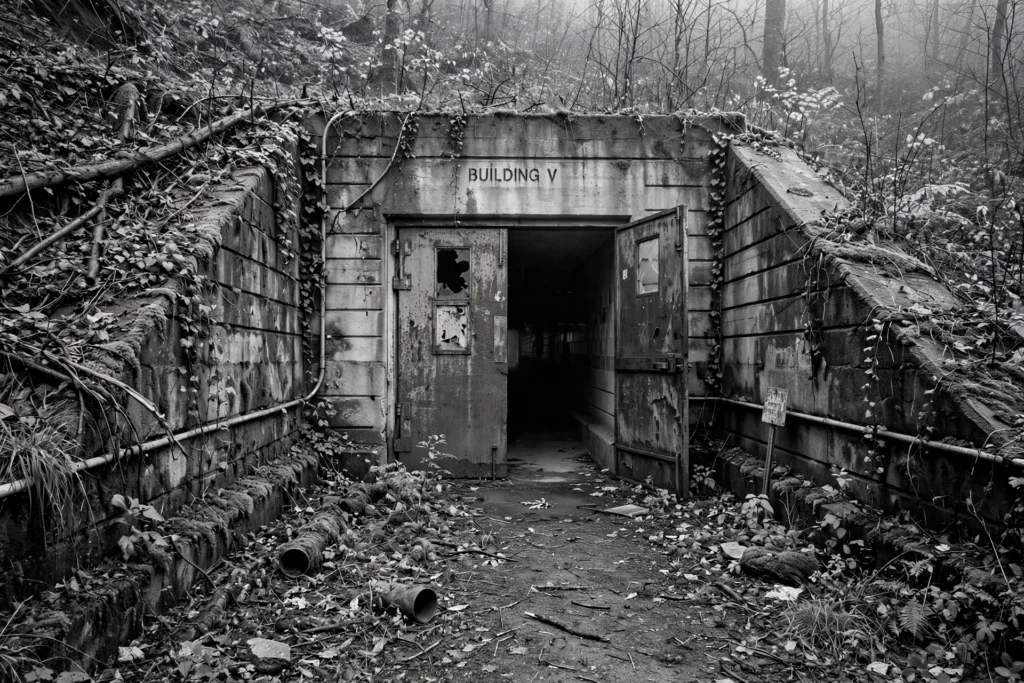
Outside of the asylum halls, ghostly voices and phantom footsteps, unexplainable cold areas, and inexplicable ringing of a bell are also part of the recurring reports. For the most part, these claims overlap with the conditions under which residents had to live, which could explain why modern-day visitors to the abandoned place experience such a profoundly creepy sensation.
It must also be said that the stories are not necessarily true in each particular case, and they should be taken with a grain of salt – in other words, treated as just urban legends. The reputation of the place was also fueled by the sharp criticism of disability rights advocates who felt that the human cost of this area’s dark history should not be trivialized by marketing it as a “haunted attraction.” This atmosphere of unease and the use of the location’s troubled past as a narrative device are what set it apart from a typical “jump scare” haunted house.
Frequently Asked Questions
Is Pennhurst State School still standing today? Yes. Much of the original campus remains on the property in Spring City, Pennsylvania. Portions are preserved as a museum documenting the site’s history, while other buildings are used for the seasonal Pennhurst Asylum haunted attraction.
Why did Pennhurst close? Pennhurst closed on December 9, 1987, following a landmark federal lawsuit, Halderman v. Pennhurst State School and Hospital, in which a judge ruled that conditions at the facility violated residents’ constitutional rights and ordered the state to transition residents to community-based care.
Can you visit Pennhurst today? Yes. The Pennhurst Museum offers historical tours documenting the site’s real history, and the property also hosts a separate seasonal haunted attraction and overnight paranormal investigation events.
Visiting Pennhurst Today
Pennhurst is a place that’s weird to think about in the context of haunted locations, because if you research it, the real-life history of what happened there is far more terrifying than any ghost story. Whether you visit Pennhurst out of interest in its place in history, architecture, or the paranormal, a trip there serves as a valuable lesson in history, as well as the ghostly history it’s become known for.
Have you ever toured Pennhurst, or had an encounter in one of these allegedly haunted places? Tell us about it in the comments!
Sources consulted for the historical details in this post include the Pennhurst State School and Hospital entry on Wikipedia, the Encyclopedia of Greater Philadelphia, the Public Interest Law Center’s summary of the Halderman litigation, and archival coverage of Bill Baldini’s Suffer the Little Children exposé.