The Case in Brief
True History vs. the Legend of Chloe Nestled along the banks of the Mississippi River in St. Francisville, Louisiana, The Myrtles Plantation has been…
True History vs. the Legend of Chloe
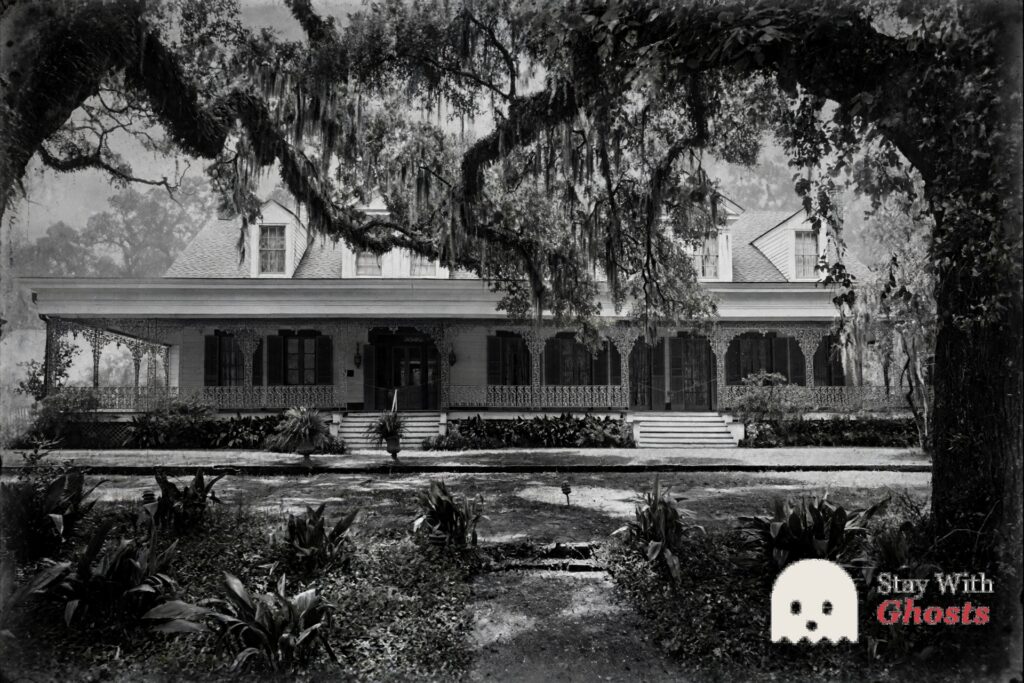
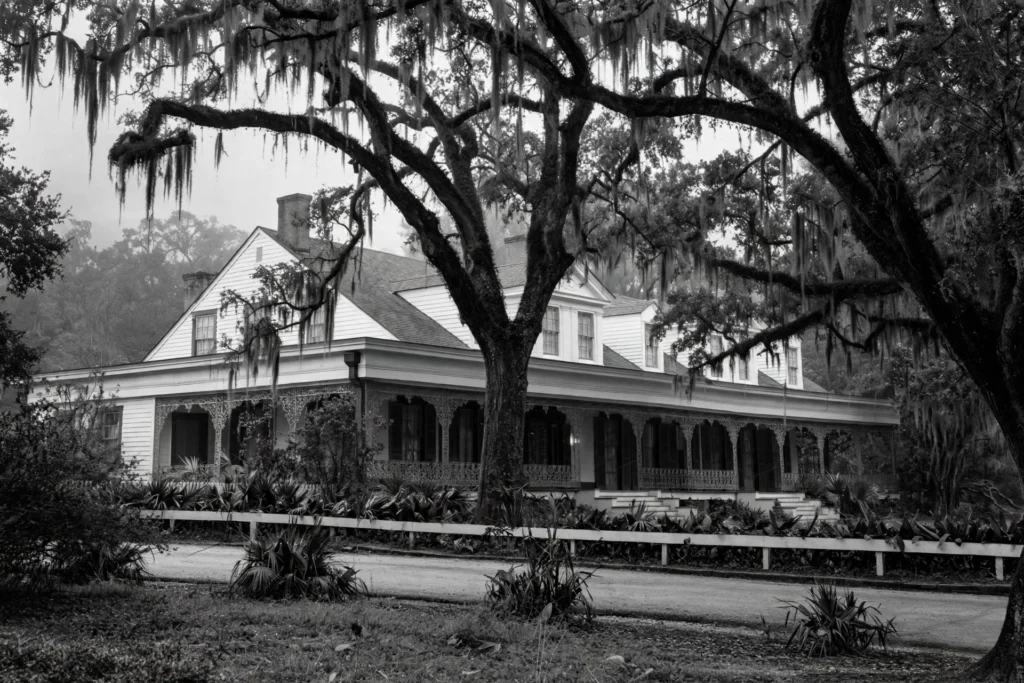
Nestled along the banks of the Mississippi River in St. Francisville, Louisiana, The Myrtles Plantation has been billed as “America’s most haunted house” for decades. The grounds are said to be the scene of a grisly killing and tormented spirits that have been made into a national media spectacle. It is also one of our most infamous ghost stories that has blown up long after the documented history was buried.
But that doesn’t mean that there isn’t a compelling tale to be told about The Myrtles Plantation. The true history of the plantation is actually much more interesting than the embellished tale of Chloe and the vengeful spirits who haunted the property. It is important to examine both sides of the story because the documented history is what fueled the fire of the fabricated legend, and to understand why historians continue to discredit the supernatural claims made by The Myrtles Plantation is to see why this haunted house mystery has persisted for so long. Here’s the story of Chloe and the vengeful ghosts of The Myrtles Plantation, and the haunted history of a Southern belle.
A Plantation Built by a Fugitive
The Myrtles Plantation house was built in 1796 by General David Bradford on 600 acres of land that at the time belonged to Spanish West Florida, not the United States. He called his property Laurel Grove. David Bradford was a man on the run from authorities for organizing an uprising called the Pennsylvania Whiskey Rebellion, an insurrection that occurred in the early 1790s. When the rebellion was crushed, he was ordered to appear before the Continental Congress to stand trial. He escaped arrest, and eventually, the punishment was rescinded. For several years, Bradford lived alone on the land he had purchased until President John Adams pardoned him in 1799. Then he returned to Pennsylvania to bring his wife, Elizabeth, and their five children to the plantation.
After General Bradford died in 1808, Elizabeth ran the plantation alone until 1817. Then she hired Clark Woodruff, one of her husband’s law students, to manage The Myrtles. Mr. Woodruff married Sara Mathilda, the couple’s only daughter, who had four children by her new husband, including Cornelia, James, and Mary Octavia. Sara Mathilda and two of her children died of yellow fever in 1823 and 1824 during an epidemic of the same disease plaguing the Mississippi River valley. Yellow fever was a dreaded illness in the 19th century and had ravaged not only the local population but also the plantations and enslaved workers in the region.
In addition, it should be noted that, as was the case with most large plantations in Louisiana at the time, The Myrtles were built on the backs of enslaved laborers. The U.S. census of 1820 records five enslaved persons, and the figure rises to thirty-two in 1830. However, the names and personal details of the enslaved are not included in the data set, representing an unfortunate loss of information about the lives and personal history of a significant portion of the Louisiana population at the time.
The house changed hands multiple times throughout the next century and a half before being placed on the National Register of Historic Places in 1978. Today, it is a bed and breakfast and event space open to the public, featuring both historical and ghost tours.
The Only Documented Death by Violence: William Winter
Amid a legend that multiple murders took place at The Myrtles, historians report only one documented occurrence of violence on the property: the killing of William Drew Winter. The lawyer was shot and killed at the plantation in the evening of January 26, 1871. According to the article, he was called to his front door by an unknown person and shot in the chest with a double-barreled gun as he opened it. He leaves behind a wife and five children.
Four black men and one white man were accused of the murder in May 1871, but none were ever convicted, as newspaper records show that at least one of the men slated to stand trial never had an official record. The killer of Winter was never identified or brought to justice. Of note, even the documented crime has been embellished in legend, with the victim supposedly staggering up the main staircase and dying on the seventeenth step, a detail that contemporary reports do not note. In reality, Winter was shot on the porch.
The Legend of Chloe, and Why Historians Say It Doesn’t Hold Up
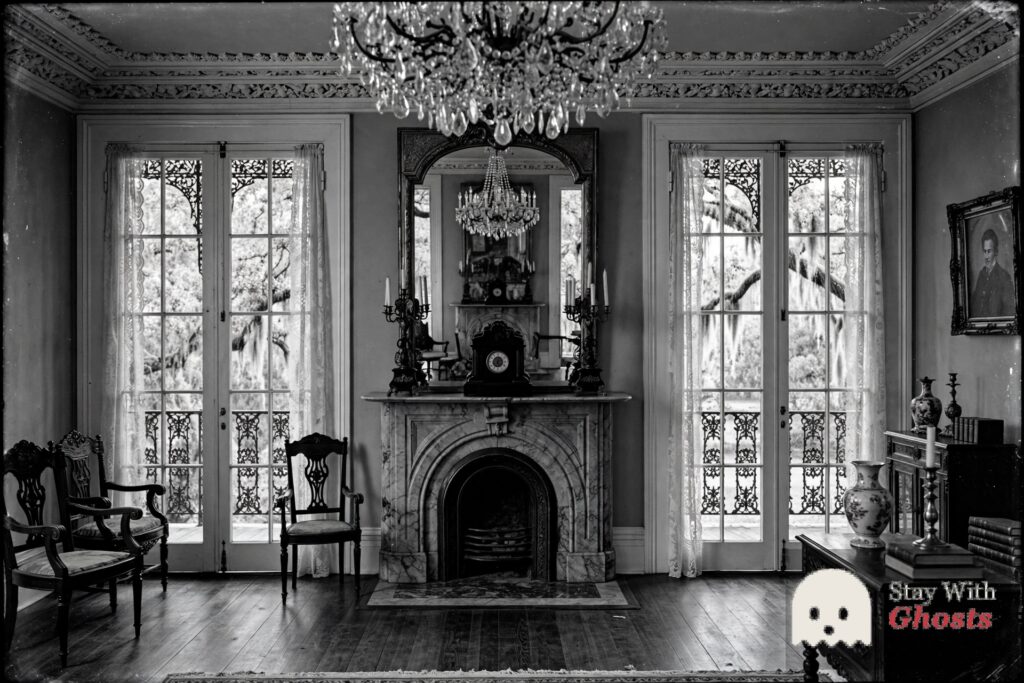
The story most associated with The Myrtles these days involves a figure known as “Chloe”, an enslaved woman believed to have been the mistress of Clark Woodruff, who allegedly poisoned a birthday cake with oleander in an attempt to punish him, accidentally killing Sara Woodruff and two of her children, and who was believed to be lynched by other enslaved workers on the property to avoid mass retaliation, among other details. It is a rich story, and according to historians who have done research into the actual records associated with the property, it is basically all made up.
There was never an enslaved person named Chloe (or Cloe) referenced in any census records, plantation inventory, or other documents associated with The Myrtles. Sara Woodruff and her children did not die of poisoning, but of yellow fever, which was, in fact, a devastating illness in the area at the specific time. And the story’s details do not align with what is known about the family’s history, including that one of the two children the story says died due to the poisoning (Mary Octavia) lived through adulthood.
The Chloe legend is broadly traced to the 1950s, when the plantation was bought by Marjorie Munson, who is believed to have created or popularized the story based on an older local legend involving a “woman in a green turban”, as the property was becoming more popular as a ghost tourism destination. Since then, it has been told, rehashed, repeated, and presented in media as a definitive part of the history of The Myrtles, despite its lack of documentary evidence.
This matters because it not only attaches an objectively horrible story (involving the death of children) to a real person who is otherwise unremarkable in documented history, it also ignores the fact that there were real enslaved people living and working on the property at the time who were never similarly memorialized in the public presentation of The Myrtles, which several historians and writers covering the property in recent years have pointed out.
What Visitors Report Today
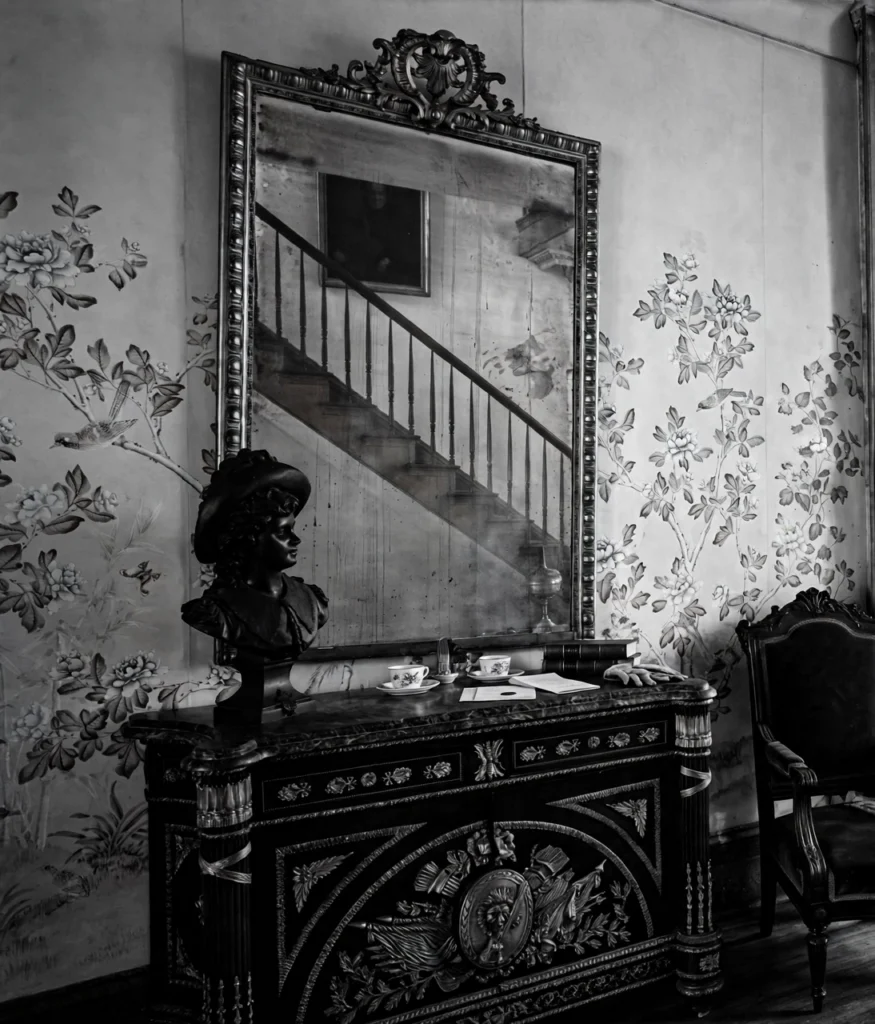
Whatever the historical basis for any particular tale, The Myrtles is genuinely renowned for its reported poltergeists. It is substantiated by the fact that the house has a history of ghost sightings, with both visitors and staff frequently claiming to see or hear children who are not present in the property, cold spots, especially around the staircase and the rooms where Woodruff’s children stayed, and phantom figures captured on camera.
The plantation’s most famous photograph, taken in 1992 during an insurance appraisal, supposedly makes the ghost visible. A frame from it is presented as the tour’s finale because, according to the staff, it shows the shape of a human figure perched between two buildings, which was actually empty at the time when the picture was taken. Moreover, the house offers a number of other allegedly paranormal photographs, including one that contains an antique mirror, in which markings like a handprint have been noticed repeatedly, even after the silvering process. However, just like all other photographic evidence of ghosts, they have never been confirmed as authentic by third parties, and should be treated as urban myths, unproven tales, and pieces of folklore, rather than actual facts or figures.
Frequently Asked Questions
Was Chloe a real person who worked at The Myrtles Plantation? There’s no historical evidence that she was. No enslaved person by that name appears in any census record, plantation document, or contemporary account tied to the property. Historians generally trace the character to the 1950s, decades after the events she’s associated with supposedly took place.
How did Sara Woodruff and her children actually die? Historical records indicate they died of yellow fever in 1823 and 1824, not poisoning. Additionally, one of the two children often named in the poisoning legend, Mary Octavia, lived well into adulthood.
Is any part of the Myrtles ghost story historically documented? Yes, the shooting death of William Drew Winter on the property’s front porch in 1871 is a real, documented, and unsolved crime, confirmed by contemporary newspaper accounts, even though later legend has added inaccurate details to how he died.
Visiting The Myrtles Today
The Myrtles Plantation is right now one of the most popular historic houses in Louisiana. Besides the classic daytime historical tours, it offers spooky evening “mystery tours”. They are based around the legends about ghosts there. This place combines a real historical tour guide with a ghost tour. It has rare history that includes a murder mystery, a fugitive founder, a family dying of disease, and an era of marketing built around its ghost story. And that’s all before the official tour has even started.
Have you actually been to The Myrtles, or do you have any “haunting experiences” to share? Let them out in the comments below!
Sources consulted for the historical details in this post include the Myrtles Plantation entry on Wikipedia, the Legends of Myrtles Plantation entry on Wikipedia, American Hauntings’ research into the property’s legends and lore, and contemporary newspaper accounts of the William Winter murder cited via Find a Grave.