The Case in Brief
THE TRUE VAMPIRE STORY OF MERCY BROWN Nestled behind a small white Baptist church on Ten Rod Road in Exeter, Rhode Island, Chestnut Hill…
THE TRUE VAMPIRE STORY OF MERCY BROWN
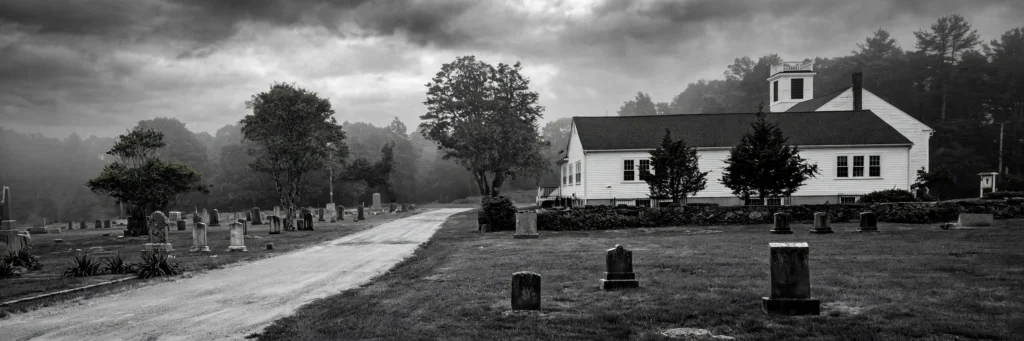
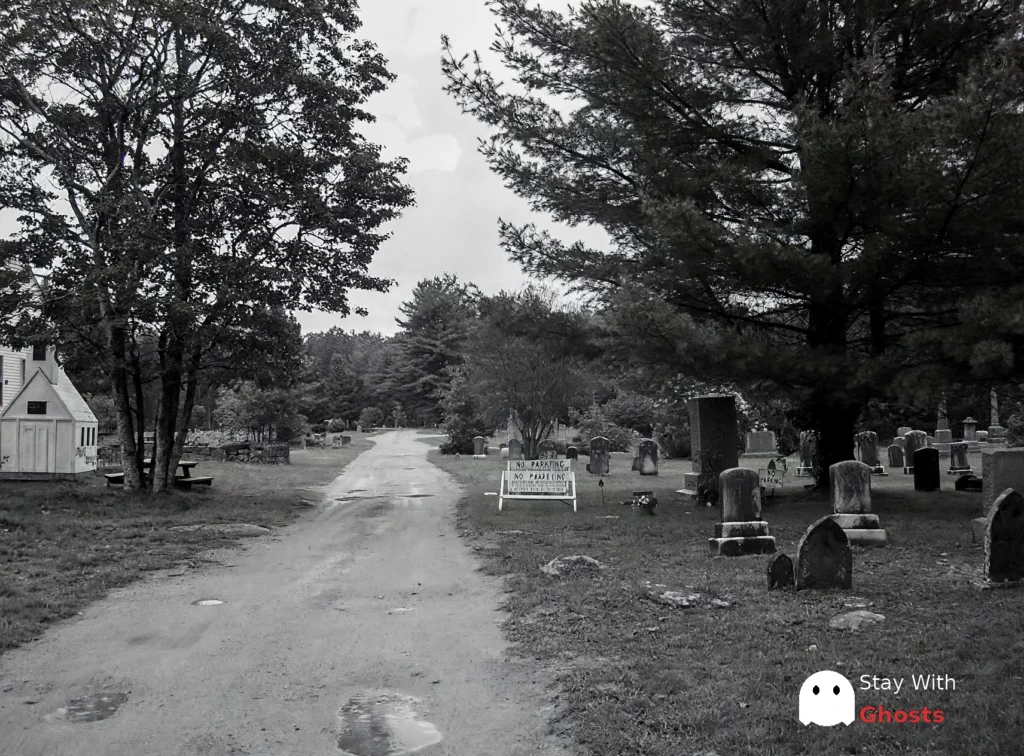
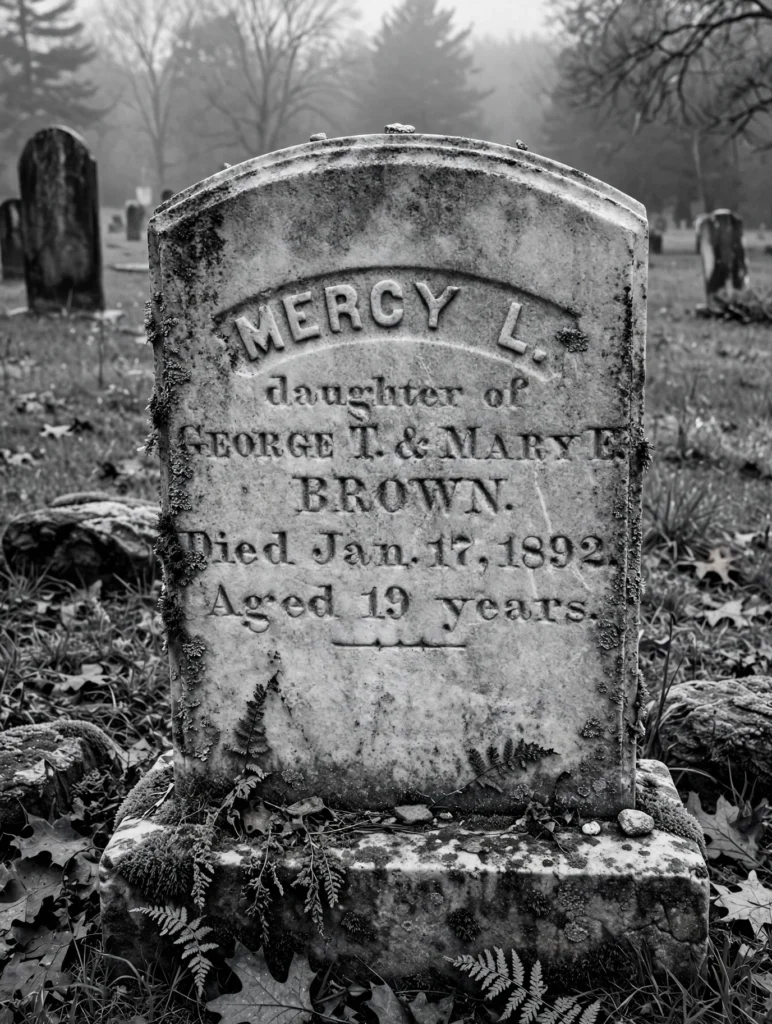
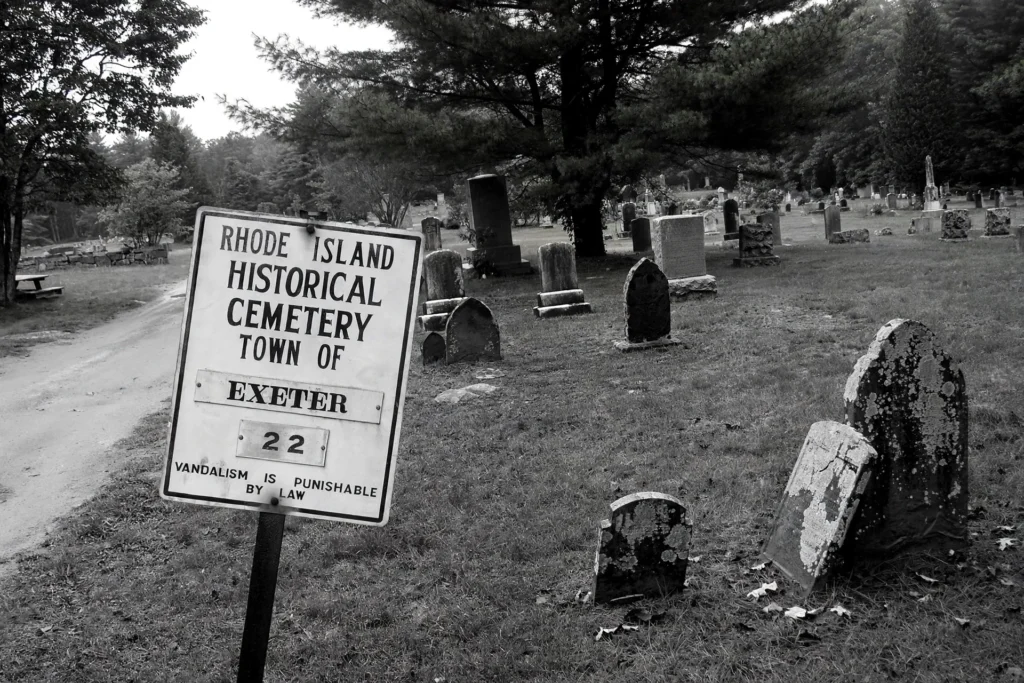
Nestled behind a small white Baptist church on Ten Rod Road in Exeter, Rhode Island, Chestnut Hill Cemetery is an unassuming ten-acre plot containing the graves of roughly a thousand interred residents. Established in 1838, this local burial ground could pass for any other cemetery on the outskirts of the city, were it not for the single headstone that draws vampire enthusiasts from around the world. Beneath it lies Mercy Lena Brown, a nineteen-year-old woman who died of tuberculosis in 1892 and was, for a brief period of time, accused of being undead.
Unlike many folkloric accounts of vampires, Mercy’s tale is not something passed down by exaggerating townsfolk in the dim candle-lit corners of centuries-old buildings, reprocessed by generations of eager writers, and turned into legend by the slow passage of time. It happened recently enough for photographs to have been taken, investigated, and published about in local newspapers. It has since been filed away as “the last case of the New England vampire panic” by historians. Following are facts surrounding the events leading up to Mercy’s death and the circumstances surrounding her resting place, along with some of the phenomena reported to occur there since.
A Family Consumed by Tuberculosis
In the late 19th century, tuberculosis, also known as consumption, was the leading cause of death in the United States. It is said to have claimed the life of 1 out of every 7 American citizens. Rural New England was particularly afflicted by the disease, as its slow and wasting progress left little understanding of how it afflicted the body, leaving many to look for external factors whenever it ran through a household.
This is precisely what happened to George Thomas Brown and his family in Exeter, New Hampshire. His wife Mary Eliza Brown passed away in December 1883 as a result of consumption. However, less than a year later, in June 1884, the couple’s oldest daughter, Mary Olive, also died of the same cause, at the age of 20. The family would survive several more years with the disease, as George’s son Edwin contracted it in the late 1880s, and George’s youngest daughter, nineteen-year-old Mercy Lena Brown, passed away in January 1892, becoming the third member of the household to die of consumption.
As the ground was frozen where Mercy’s remains were supposed to be laid to rest, her body could not be interred immediately. Mercy’s body was placed in a vault, an above-ground crypt at Chestnut Hill Cemetery, to wait for the thawing of the ground in spring, which was customary in New England at the time. This explains why her body, kept in a cold and damp vault for nearly two months, would become the catalyst for an event that would gain far-reaching notoriety and become infamous as the “Lena Brown Witchcraft Murder”.
The Exhumation of March 17, 1892
In the late 19th century, tuberculosis, also known as ‘consumption,’ was the leading cause of death in the United States, claiming the life of approximately one out of every seven Americans. It particularly took a toll on the residents of rural New England, as the disease, slow and wasting, without an established cure, baffled doctors and ordinary people alike, who often attributed its appearance in a household to supernatural causes.
As Edwin’s condition continued to deteriorate, the neighbors and relatives began to believe that one of the family members’ dead was draining the life-force of the living, making the consumption appear in more than one household. This dark superstition was an old European folk tale that had haunted New England’s villages for the previous few centuries. Thus, on March 17, 1892, with the reluctant consent of George Brown, the locals and a doctor arrived at the Chestnut Hill Cemetery to dig up the corpses of Mary Eliza, Mary Olive, and Mercy.
The bodies of the two older women were, as expected, moldering and decayed, as they had been buried years before the town hall had opened it to the public. However, Mercy’s body was substantially less decayed, as she had been interred in the crypt during the winter, not the ground. Her corpse was considerably better-preserved than one might have anticipated for someone who had been deceased for around nine weeks. Upon inspection, the physician discovered that the liquid blood in her heart and liver was, in fact, still liquid – another abnormality that could be explained due to Mercy’s body being ‘refrigerated.’
According to the rituals of the local beliefs, Mercy’s heart and liver were pulled out and burnt on the rock. The doctor and locals mixed the ashes into a tonic, which they made into a ‘vampire cure’ for Edwin. They believed that it would purge his system, removing the life-force from the dead woman. It did not, however, save Edwin, who passed away on May 2nd, 1892, two months later.
The doctor who presided over the exhumation, Harold Metcalf, was skeptical of the locals and the process all along. Nevertheless, he was quoted as saying the procedure was a good lesson in physiology in the following years. The matter had already gained some notoriety, as newspapers wrote about the event occurring. Thus, the authorities considered it an infamous part of American history, an extension of the so-called ‘New England vampire panic.’ Similar instances of ‘vampire hunting’ occurred throughout the 19th century in Rhode Island, Connecticut, and Vermont, as the mysterious and terrifying disease ravaged through families and neighborhoods.
The Link to Dracula
Mercy Brown’s case did not remain a local legend as it was first thought. When Bram Stoker died in 1912, some researchers who went through his personal belongings discovered several newspaper clippings concerning the Mercy Brown legend, fueling the speculation that Stoker was inspired by Mercy’s case while writing Dracula in 1897. Although there is no concrete evidence that Stoker used the Exeter case as the basis for his writing, it became a frequent subject of discussion among historians. It is even assumed now that the case inspired H.P. Lovecraft to write “The Shunned House.”
What Visitors Report at the Grave Today
More than a century and a half later, Mercy Browns grave remains one of the most popular sites to visit in New England. It also has a series of ghost stories that have grown around it.
Those who visit and research the site have seen and encountered many odd things at this location. While visiting the headstone, people have been shoved back by some invisible force when they get too close to the stone, as if something there doesn’t want them to be there. People have also reported cold spots, orbs of light that appear in pictures near the grave, and strange noises in the cemetery at night. One story that appears to be more common than not is a scent of roses wafting over to visitors who have paused to say a silent prayer or give a blessing to Mercy’s grave. This strange story is told about most often, because there were no flowers nearby that the person could have smelled.
Whether these are things only attributed to the fact that a teenage girl was mutilated and burned by fearful neighbors, or if there really are ghosts there is unknown. It’s a mix of both, really, but either way, Chestnut Hill Cemetery remains a popular destination for those from all over the neighboring state of Rhode Island, and the name Mercy Brown still appears again and again in most lists of haunted locations in New England.
Frequently Asked Questions
Was Mercy Brown actually believed to be a vampire during her lifetime? No. The suspicion arose only after her death, when her family and neighbors were trying to explain why tuberculosis had killed three members of the same household. Nothing in her life suggested any such belief while she was alive.
Why did Mercy’s body look so different from the others when exhumed? Because the ground was frozen when she died, her body was kept in an above-ground crypt rather than buried immediately. The cold storage significantly slowed decomposition compared to bodies that had already been in the ground for months or years. At the time, the attending doctor had pointed this out.
Can you visit Mercy Brown’s grave today? Yes. Chestnut Hill Cemetery is a public burying ground in Exeter, Rhode Island, and Mercy’s grave is marked and accessible to visitors. Guests are asked to be respectful, as it remains an active historic cemetery.
Visiting Chestnut Hill Cemetery
Chestnut Hill Cemetery is a small place tucked behind the local Baptist church in the rural village of Exeter. Perhaps it would not have garnered much attention if not for its connection to one of the earliest recorded cases of vampirism hysteria in New England. Whether you are interested in the real-life medical and social history of the 19th century, Ancestory.com’s claim to fame, or the supernatural activity that haunts the Cemetery at night, you should visit the resting place of Mercy Brown.
Have you been to the Chestnut Hill Cemetery or experienced something strange at the grave of Mercy Brown? Let us know in the comments below!
Sources consulted for the historical details in this post include the Mercy Brown vampire incident entry on Wikipedia, the Rhode Island Historical Society, HISTORY.com’s account of the case, and Atlas Obscura’s entry on Mercy Brown’s grave.