The Case in Brief
“Lizzie Borden took an axe and gave her mother forty whacks, when she saw what she had done she gave her father forty-one” There…
“Lizzie Borden took an axe and gave her mother forty whacks, when she saw what she had done she gave her father forty-one”
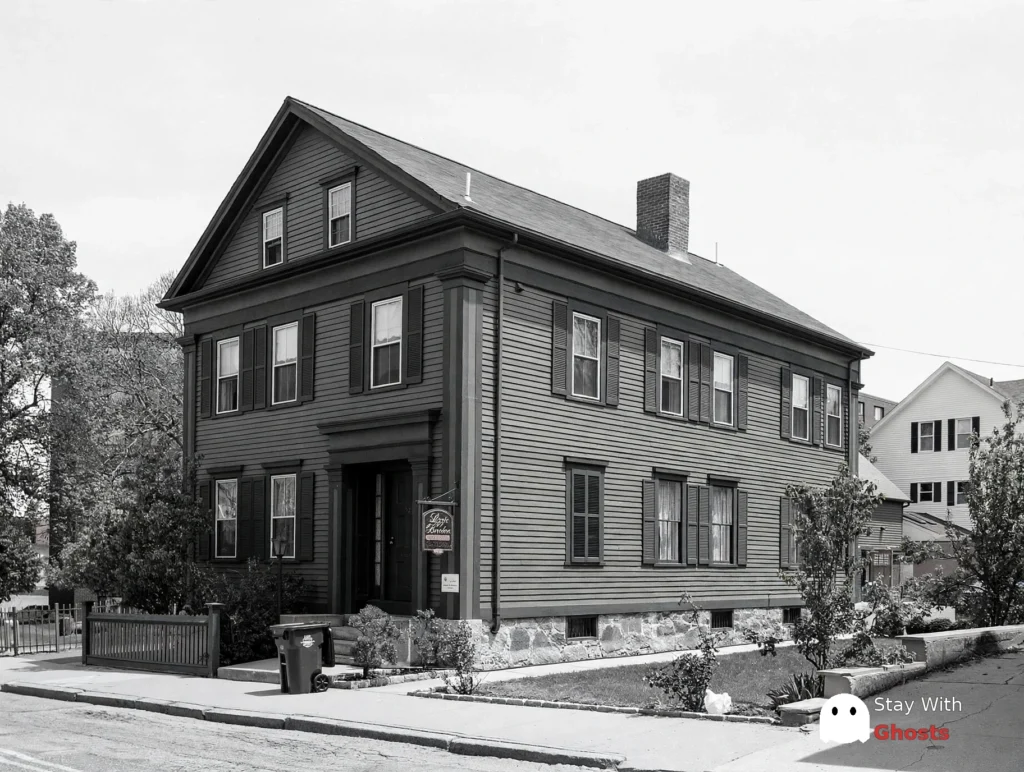
There is a house on Second Street in Fall River, Massachusetts, that is anything but ordinary.
You would expect a mansion behind wrought iron fences. Instead, you are standing in front of a narrow, greenish clapboard two-family-style house wedged onto a lot that is too small. On one side is a driveway that used to have a barn on it. By outward appearances, it’s a profoundly ordinary house. Andrew Borden was a wealthy man, worth about $300,000 at the time, estimated roughly $9 to $10 million in today’s money. He was a frugal man who didn’t even have an upstairs bathroom because he didn’t believe in spending his fortune.
Those frugal reasons may be why the house is still standing today. That fateful morning on August 4, 1892, went down in history. The house still has the same layout it did 134 years ago.
You can book a room overnight, or the whole house, if you dare.
The Morning
What we do know is that the Bordens, as well as their maid Bridget Sullivan, had been ill a few days before, on August 2, 1892, with a stomach bug that caused vomiting. Abby walked across the street the next day, August 3, to visit Dr. Seabury Bowen and told him she suspected that they were being poisoned. The doctor dismissed this as bad mutton broth — that had been on the menu a few days before, and in the August heat, it was bound to have spoiled. Although refrigeration was by now available, there was not much of it at the Borden house.
The day before the murders, Lizzie Borden walked into Smith’s Drug Store, on South Main Street in Fall River, and tried to buy ten cents’ worth of prussic acid. Lizzie told them it was to clean a sealskin cape. Eli Bence, working the counter that day, refused her request because, he testified in court, it was unusual for a woman to come in asking for hydrogen cyanide to clean a cape. He testified against her in court, but somehow the testimony was found to be inadmissible.
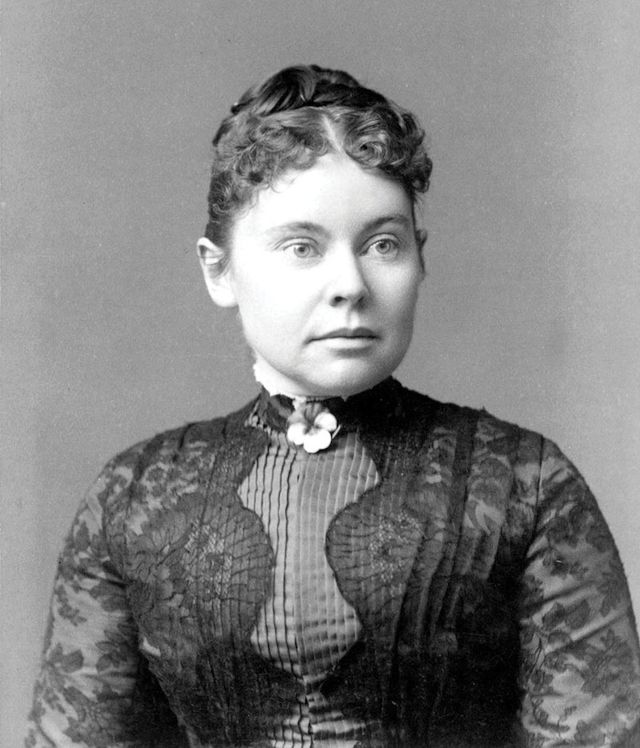
On August 4th, John Vinnicum Morse, brother of Andrew’s first wife, hence Lizzie and Emma’s uncle (he was visiting and staying with the Bordens that day), left after breakfast on his way to visit some relatives on the other side of town. Lizzie’s sister, Emma, had been away (she was about fifteen miles away visiting friends) in Fairhaven for some time. Andrew Borden, Lizzie’s father, was tending to business errands downtown. Who else was in the house that morning? Abby (Lizzie’s stepmother), Lizzie (herself), and Bridget (maid).
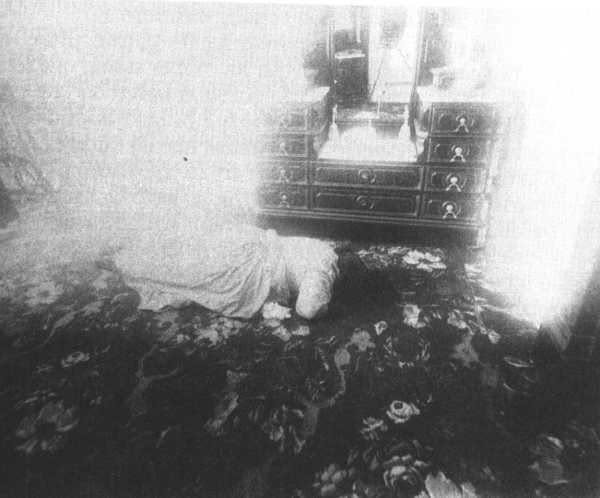
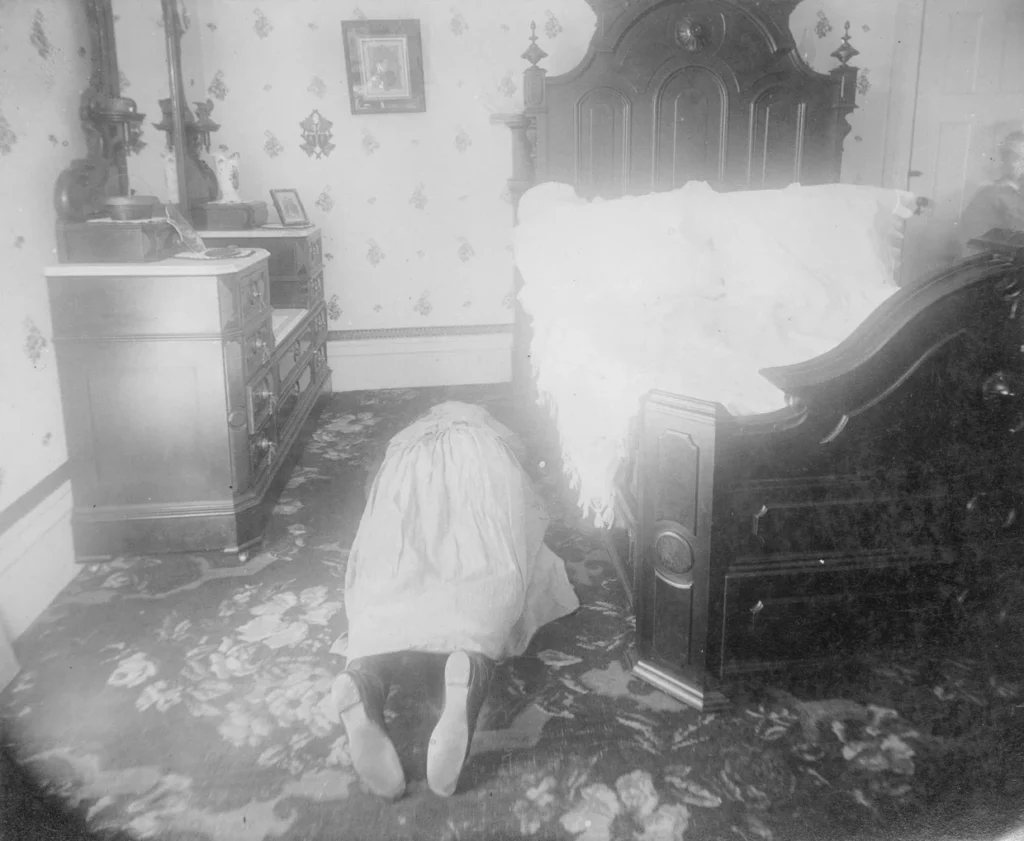
Abby had gone upstairs to the guest room John (herself was supposed to have been sleeping in earlier that morning) was staying in to change the pillowcases. What we do know is that she was standing on the far side of the bedroom, facing away from the door. She was hit on the side of her face with a hatchet. Do we know if she turned or fell as the blows continued? At autopsy, nineteen blows to the head were counted. Abby (Lizzie’s stepmother) was only sixty-four years old and about two hundred pounds when she fell face down between the bed and the dresser.
“Nobody reported hearing anything.”
Bridget (maid) was outside washing windows. Andrew Borden returned around 10:45 a.m. and discovered that the front door had been bolted by spring lock, key lock, and slide bolt. He had to be let in. Bridget later testified under oath that she cursed at the stuck lock and heard Lizzie laughing from the top of the stairs. What we know today is that, standing at the top of the stairs, one can see straight into the guest bedroom which Abby had been found lying dead for hours.
Lizzie later denied ever having been upstairs at all.
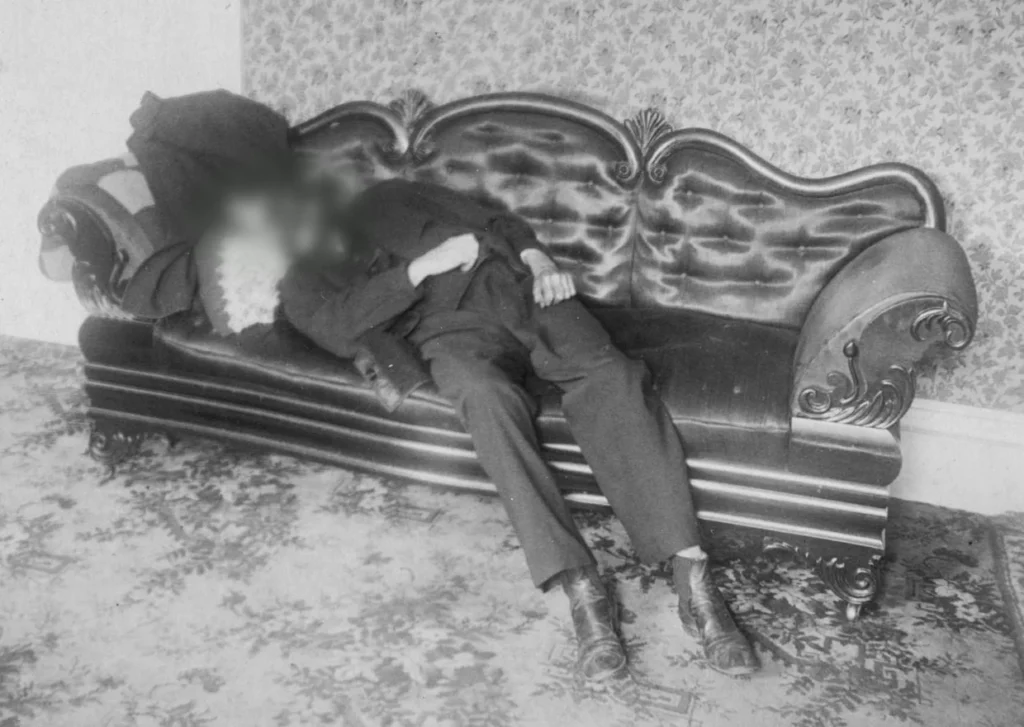
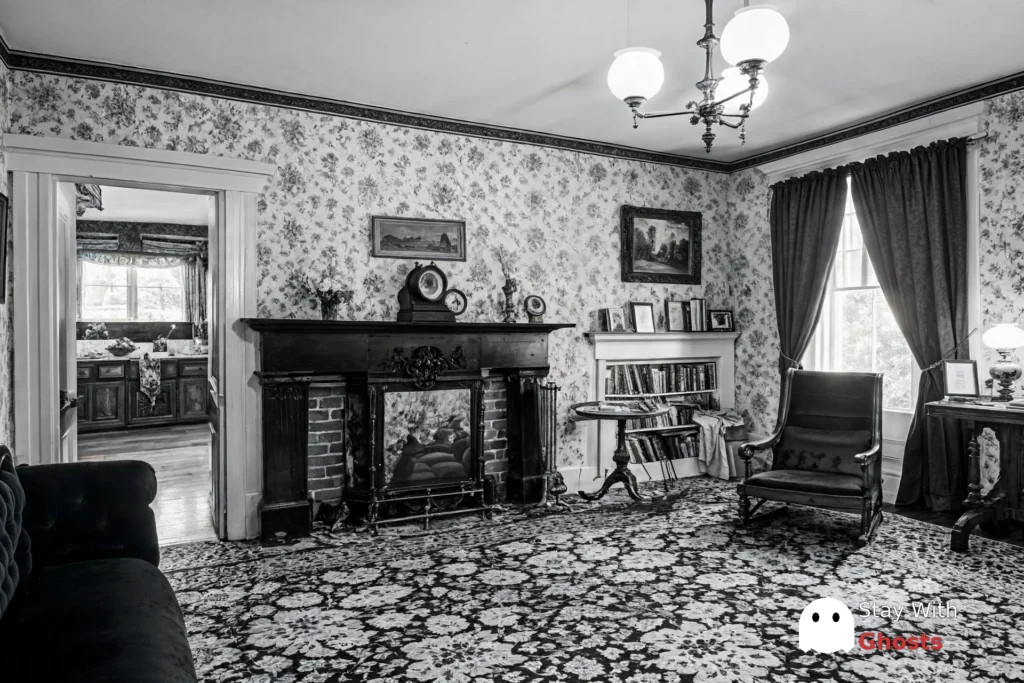
Andrew lay down on the sitting room sofa in his Prince Albert coat, boots still on, and fell asleep. Sometime between 11:00 and 11:10, someone stood over him and brought the hatchet down ten or eleven times. The first blow probably killed him. The rest destroyed his face. One eye was cut cleanly in half.
At 11:10, Lizzie called out to the maid:
“Come down quick, father’s dead, somebody came in and killed him!“
The Aftermath
Officer George Allen was the first one on the scene, and the whole town of Fall River knew within the hour. When Bridget and a neighbor came upstairs to get a sheet to wipe off Andrew’s body, they found Abby’s body wedged between the bed and the dresser, realizing that it was, in fact, two murders.
Lizzie’s story of that morning kept changing, telling police she was in the barn loft searching for lead sinkers for a fishing trip, then later saying that she couldn’t actually remember where she was. Investigators found no footprints in the dust of the barn loft floor, and it was a hot August day, not exactly a logical time to be going on a fishing trip.
Even though there were masses of blood at both murder scenes, none of it was found on Lizzie’s clothes, her hands, or anywhere else on her person. This became one of the biggest mysteries of the case, and also one of the reasons why many people still believe Lizzie to be innocent.
Three days after the murders, Lizzie set a dress on fire in the kitchen stove while her sister, Emma, and family friend, Alice Russell, watched. Lizzie claimed that the dress was ruined by paint and no longer had any use for it, even though there was a police officer standing right outside the house. It became one of the most infamous pieces of evidence in the infamous Borden case, although the dress was never proven to have any connection to the murders.
Lizzie Andrew Borden was arrested on August 11, 1892, for the murders of her father and stepmother.
The Trial
The trial which began on June 5, 1893, and became a national sensation. Reporters from New York and Chicago rushed to New Bedford, and the case became a topic of conversation for days in the newspapers.
The defense attorneys managed to create several favorable circumstances. Eli Bence, who testified about Lizzie’s attempt to buy prussic acid, was dismissed. Lizzie’s own testimony from the inquest was also considered, and since she appeared to be lying, it was disregarded because she did not have an attorney. The hatchet that was found in the basement with no handle also turned out not to be the murder weapon, although there were claims that it might have been used to smash the skull. There was no evidence linking it to the crime, and there was no proof of the missing handle.
The jury of men reached its verdict around ninety minutes after deliberation. On June 20, 1893, Lizzie was found not guilty of the murder of her sister and husband.
The Legend vs. The Facts
The skipping-rope rhyme that starts this story is, sadly, inaccurate. Abby was hit approximately eighteen or nineteen times, not forty blows as the rhyme suggests. Andrew was struck ten or eleven times not forty-one as claimed in the rhyme. A brutal number of times indeed, but not quite as much as history would have us believe.
Emma was cleared of all charges as early as the first investigation. She was on the opposite side of the town in Fairhaven for more than a week. Besides, no one else was ever accused, and the case remains officially unsolved to this day.
After the Verdict
Lizzie inherited a considerable amount of her father’s property, which she used to buy Maplecroft, a large house on French Street, in the fashionable part of Fall River, where the old-money families used to live. She started to sign herself with the name Lizbeth A. Borden.
The acquittal did not make her an accepted member of the community, and Fall River’s society shunned all her invitations for the rest of her life. Lizzie died of pneumonia on June 1, 1927, at the age of sixty-six. Her daughter died nine days later in a New Hampshire nursing facility, and both are buried next to each other in the family plot at Oak Grove Cemetery, not far from the parents they tried to murder.
What Lingers
The house from 92 Second Street is now a museum, which is available for overnight stays. The guests can take a tour of the same rooms where Andrew and Abby Borden were murdered. They can also spend the night in the period-furnished bedrooms and have a breakfast of bananas, sugar cookies, and johnnycakes, which were part of the daily menu.
The people who stay overnight in the Borden house’s rooms seem to have unique stories. Some guests and staff claim to hear a woman’s sobbing, especially in the chamber, which is now a guest room where Abby’s body was found.
Moreover, people staying at the house frequently report feeling of hearing someone walking overheard on empty corridors. In addition, the people staying at the house frequently report that doors are opening and closing on their own. Most often, a cold spot on the second-floor landing is mentioned, which is measured by thermal imaging, even in summer.
Furthermore, some witnesses saw a woman in an old-fashioned dress standing at the top of the stairs, but when they looked again, she vanished. Whether it was Abby, Lizzie, or something else entirely is unknown, because the ghost stories of this house remain unsolved. One thing is clear: the Borden house has not been able to fully close the case.
Visiting Today
The Lizzie Borden House is a museum and bed-and-breakfast in Fall River, Massachusetts. They offer day tours that tell the history of the house and also offer overnight stays, ghost tours, and ghost hunts. Whether you like the unsolved mystery aspect, or just want to experience the Borden family’s troubled household, or even just want to sleep in the room where Abby’s body was found, a visit to this bed-and-breakfast could be one of the few opportunities in America to spend the night in an unsolved first-degree murder case.
Have you ever stayed in the Borden house, or saw something suspicious while you were there? Tell us what you saw in the comments below.
Sources consulted for the historical details in this post include the Lizzie Borden House’s official history page, the Fall River Historical Society’s Lizzie Borden collections page, Wikipedia’s Lizzie Borden entry, and the house’s own ghost tours page for reported paranormal accounts.